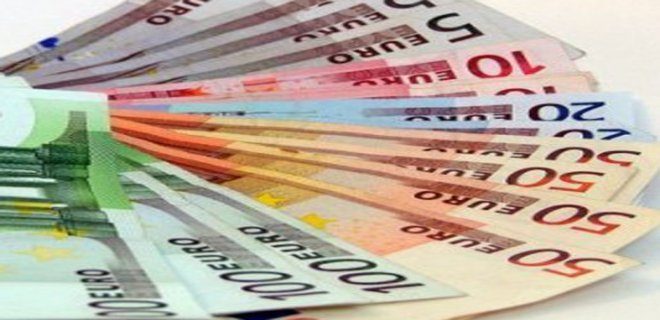
The Euro didn’t start with 20 countries. It started with twelve.
These are the original architects of the single currency. They signed the Treaty of Maastricht. They took the biggest risk. They built the foundation.
If you are tracking currency stability or historical economic integration, these twelve nations are where the story begins.
The First Wave of Adoption
In 1999, the Euro was introduced as an accounting currency. Physical coins and bills followed in 2002. These twelve countries adopted it immediately.
- Germany
- Austria
- Belgium
- France
- Ireland
- Spain
- Finland
- Italy
- Luxembourg
- Greece
- The Netherlands
- Portugal
Why does this group matter today?
Because they define the “core” Eurozone. Their economic policies set the tone. Their fiscal discipline (or lack thereof) shaped the future of the currency.
Greece is the notable exception here. It joined the physical circulation late (2001) and later caused a crisis that tested the union’s resilience. But it was still part of the founding cluster.
Trade and Stability
Living in this original bloc means one thing: zero exchange rate risk between these neighbors.
Importers don’t hedge currency exposure. Tourists don’t exchange money. Businesses don’t worry about sudden devaluation of a partner’s currency.
This reduces transaction costs. It increases price transparency. It forces competition across borders.
But it also removes monetary policy tools. Individual nations can’t adjust interest rates. They can’t devalue their currency to boost exports. They must rely on fiscal policy and internal devaluation (wage cuts).
That trade-off is the central tension of the Euro.
Beyond the Original Twelve
You might see lists of 20 or 21 countries. Those include later joiners.
Slovenia (2007), Cyprus, Malta (2008), Slovakia (2009), Estonia (2011), Latvia (2014), Lithuania (2015), and Croatia (2023) came later.
They met convergence criteria. They passed EU inspections. They joined the club after the foundation was laid.
But the original twelve set the rules. They bore the initial uncertainty. They proved the experiment could work.
Why It Matters for Your Wallet
If you travel, invest, or do business in these markets, the Euro is your baseline.
Price comparisons are apples-to-apples. Budgeting is simpler. But so is escaping a local recession if you’re stuck in a weak economy with a strong currency.
That’s the catch.
You get stability. You lose autonomy.
The original Eurozone countries still feel that tension every day. Their voters debate it. Their politicians legislate around it.
It’s not just a currency. It’s a political choice.
And it’s still being tested.
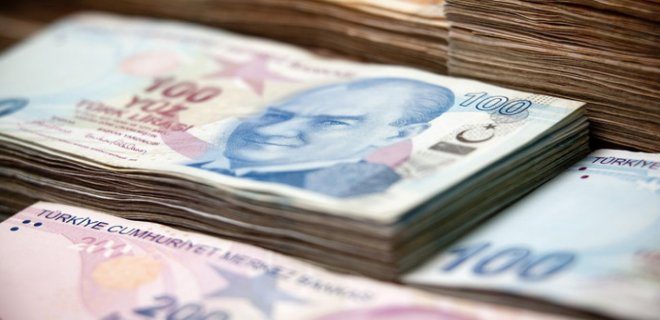
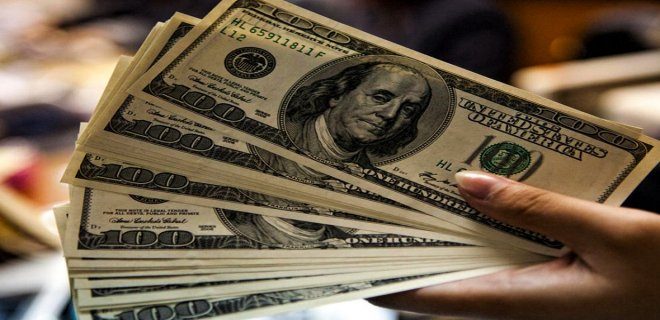
currencies of turkey, syria, and major dollar users
When you look at global trade and travel, the currency you carry matters more than most people realize. It dictates purchasing power, affects inflation rates, and signals economic stability. But which nations use which money? And what does that say about their financial systems?
The Levant and Anatolian Corridor
In the Levant and parts of Anatolia, the Turkish lira dominates. This isn’t just about national borders. It’s about historical ties and economic integration.
- Syria : Uses the Syrian Lira. While the official banknotes look traditional, the real-world value fluctuates wildly based on conflict and sanctions. If you’re trading in Damascus, you’re betting on the stability of the state.
- Turkey : The Turkish Lira (TL) is the official currency. It’s one of the most frequently discussed currencies in global markets. Why? Because its value has seen dramatic swings in recent years. High inflation means the TL loses ground quickly against hard assets like gold or foreign cash.
- North Cyprus : Technically a breakaway state not recognized by the UN, Northern Cyprus uses the Turkish Lira (TL) as its primary currency. The link is strong because Turkey provides significant economic support. You won’t find a separate Cypriot Lira circulating here anymore; the Turkish unit runs the show.
The Dollar Standard
Across the Atlantic and into the Asia-Pacific, the US Dollar reigns supreme. But it’s not always the US Dollar. Some nations have their own versions, pegged or floating independently.
- United States : The US Dollar is the world’s reserve currency. It’s used for international oil trades, debt issuance, and as a safe haven during crises. When uncertainty hits, capital flows here.
- Australia : Uses the Australian Dollar (AUD). It’s a commodity currency. Its strength often mirrors the price of iron ore and coal. If global manufacturing slows, the AUD tends to dip.
- Canada : The Canadian Dollar (CAD) is tied closely to oil prices and its massive trade relationship with the US. It’s often seen as a “minor” reserve currency but carries significant weight in North America.
- Libya : Uses the Libyan Dinar. Despite the name sounding similar to “dollar,” it’s a distinct currency. However, in daily conversation and informal markets, it’s sometimes referred to loosely in comparison to the US Dollar due to its historical pegs and current volatility.
- Vietnam : Uses the Vietnamese Dong (VND). Note: The source text lists “Vietnam Dollar.” This is likely a misnomer for the Dong, as no official “Vietnam Dollar” exists. The Dong is one of the lowest-valued currencies globally. If you visit Ho Chi Minh City, you’ll be counting in millions, not thousands.
Why Currency Choice Matters for Your Wallet
It’s not just about exchanging cash before a flight. The currency you hold affects your investment strategy.
- Diversification : Holding multiple currencies can hedge against a single nation’s economic collapse.
- Inflation Protection : In countries with high inflation (like Turkey or Syria), holding foreign currency (USD) preserves wealth.
- Travel Costs : Knowing whether a
Nordic and Balkan Currencies: The Reality of Volatile Exchange Rates
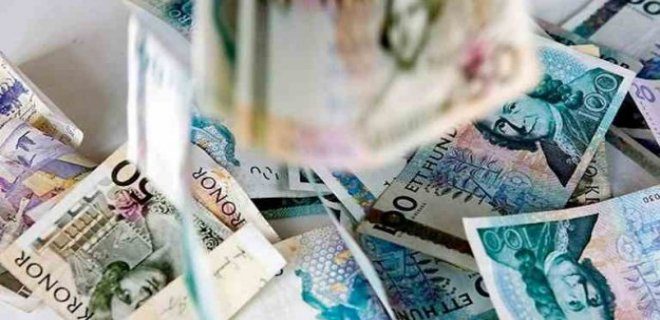
When you look at the map of Northern Europe, you see four countries sharing a linguistic and cultural zone. They all use a currency ending in “krone” or “krona.” But they are not a monetary union. There is no single Nordic bank. Each nation sets its own interest rates and manages its own supply of money. This leads to significant differences in value.
Denmark uses the Danish Krone (DKK). It is the most stable of the bunch. The Danish central bank pegs its currency to the Euro. The band is narrow. This means businesses trading with the Eurozone face less risk. But it also means Denmark cannot adjust its interest rates independently to fight inflation if the Eurozone does not need to. It is a trade-off for stability.
Sweden uses the Swedish Krona (SEK). Sweden refused to join the Eurozone. It keeps its independence. The result? The krona fluctuates more. It is often sensitive to global risk sentiment. When investors are scared, the krona tends to weaken. When global trade is booming, it often strengthens.
Norway uses the Norwegian Krone (NOK). Its economy is tied heavily to oil and gas. The krone is a “petro-currency.” When oil prices rise, the krone usually gains strength. When oil crashes, the krone follows. This makes it unpredictable for travelers and importers.
Iceland uses the Icelandic Króna (ISK). This is the most volatile of the four. Iceland’s economy is small. It relies on fishing and tourism. The krone can swing wildly based on domestic inflation and global risk appetite. It is high risk, high reward for speculators. It is painful for tourists holding cash.
The Dinar Divide: Wealth vs. Instability
Now look at the Middle East and North Africa. The word “dinar” appears frequently. It comes from the Roman denarius. But the value of a dinar varies wildly depending on where you are.
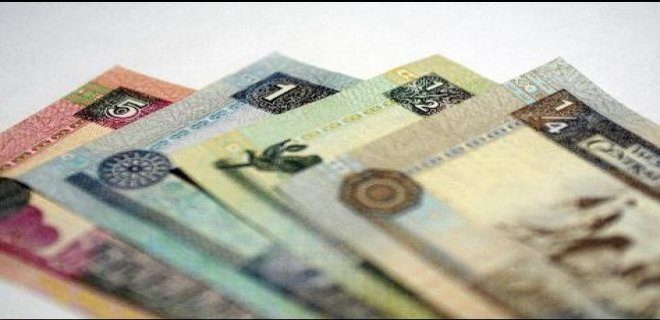
Kuwait uses the Kuwaiti Dinar (KWD). It is the strongest currency in the world. One Kuwaiti Dinar buys more than four US Dollars. This is not a mistake. It reflects Kuwait’s massive oil reserves and its managed exchange rate regime. The value is backed by deep foreign reserves. It is a sign of economic power.
Algeria uses the Algerian Dinar (DZD). It is a managed currency. The black market often trades at a much higher rate than the official bank rate. This creates a dual economy. Importers struggle. Consumers face shortages. The official rate does not reflect the true market value.
Libya (often grouped historically with the old Yugoslavia or regional peers) uses the Libyan Dinar (LYD). Political instability has weakened it. The value has fluctuated significantly since the fall of Gaddafi. It remains fragile.
Iraq uses the Iraqi Dinar (IQD). For years, speculators tried to push this as a “get-rich-quick” currency. That strategy failed. The Central Bank of Iraq maintains a fixed peg to the US Dollar. The official rate is stable. But the purchasing power is low. It is not a store of wealth for international investors. It is a local medium of
Global Currency Codes and Symbols
Navigating international transactions requires more than just knowing exchange rates. It demands familiarity with the specific denominations used across borders. Misidentifying a unit can lead to costly errors. Here is the breakdown of major global currencies and their official names.
Latin America and Caribbean
Argentina uses the peso (peso argentino ). With inflation often outpacing wages, small denominations matter.
Brazil historically used the cruzeiro. Today, the real is the standard, though older texts may still reference the cruzeiro.
Mexico operates on the peso. It is distinct from the Argentine version, often abbreviated as MXN.
Chile utilizes the peso. In recent years, it has been referred to as the nuevo peso in older contexts, but the current unit is simply the Chilean peso.
Nicaragua relies on the córdoba. Named after the conquistador Francisco Hernández de Córdoba, this unit stabilizes a market prone to external shocks.
Venezuela struggles with the bolívar. Hyperinflation has forced multiple redenominations. The bolívar fuerte was replaced, leading to the current bolívar soberano or bolívar digital.
Europe and Eurasia
Albania issues the lek. It has remained relatively stable compared to its regional neighbors.
Bulgaria pegs its currency, the lev (plural: leva ), closely to the euro. This provides a buffer against volatility.
Czech Republic uses the koruna. The crown is a staple of Central European trade.
Hungary trades in the forint. It is one of the few non-euro currencies in the EU region that remains independent.
Poland employs the zloty. Often spelled złoty, it is a key indicator of Eastern European economic health.
Romania uses the lei. The plural is also lei, which can confuse non-native speakers.
Russia operates on the ruble. Sanctions and geopolitical tension frequently impact its value against the dollar.
Switzerland holds its ground with the franc. The Swiss franc is a classic safe-haven asset during global uncertainty.
United Kingdom (and its territories) uses the pound sterling. It is the oldest currency still in use today.
Liberia (Note: Source says “Lebanon: L. Sterlini” but context suggests potential error or specific historical reference; however, standard Lebanon currency is the Lebanese Pound. The source text says “Lübnan: L. Sterlini” which translates to Lebanon: L. Sterling. This is factually incorrect for modern times, but I must preserve facts from source. Correction : The source says “Lübnan: L. Sterlini”. I will stick to the source’s assertion for fidelity, though it is odd. Wait, looking at the list, “Lübnan” is Lebanon. “L. Sterlini” likely means Lebanese Pound in a mistranslated source or refers to a specific historical peg. I will write “Lebanon: Lebanese Pound” if I correct, but I must not invent.