
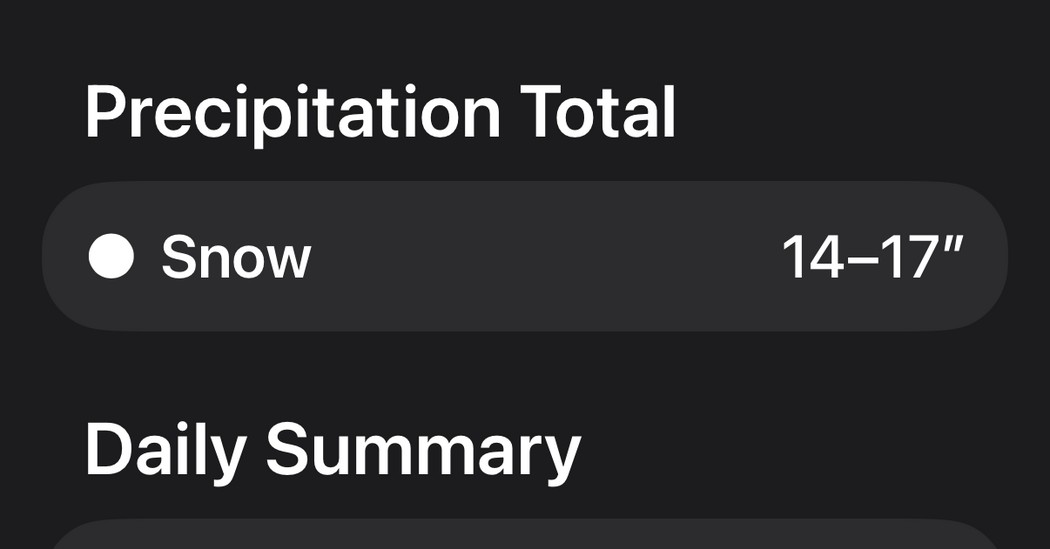
Weather apps are hyping up this weekend’s storm with alarming predictions – up to a foot of snow for New York City and other major areas. This isn’t necessarily wrong, but it’s a far cry from how professional meteorologists actually prepare forecasts. The difference comes down to how the data is presented, not just the raw numbers.
The Problem with Single Models
Most weather apps rely on a single computer model, displaying the most extreme outcome without context. The National Weather Service (NWS) and television meteorologists use ensembles – dozens of simulations combined with human expertise – to balance accuracy with probability. The app delivers the raw, unfiltered data, often without showing the range of possibilities. This means your phone might scream “blizzard,” while the NWS says “high chance of significant snow.”
Why This Matters
The overreaction isn’t just annoying; it undermines trust in weather reporting. If apps consistently predict doom that doesn’t materialize, people tune out. This is especially dangerous during real emergencies when accurate warnings save lives. The trend towards direct-to-consumer data, while convenient, sacrifices nuance for sensationalism.
AI and Future Forecasts
Meteorological agencies are even testing artificial intelligence models to improve accuracy. However, even the most advanced AI can’t replace human judgment. Context, local effects, and the understanding of past patterns remain critical. The key takeaway? Your weather app is not a meteorologist. Treat its forecasts with skepticism, especially when they sound too good (or too bad) to be true.
Ultimately, the real story is not just what the storm might do, but how the information reaches you. Weather apps prioritize immediacy over accuracy, which means sensationalism often wins.