
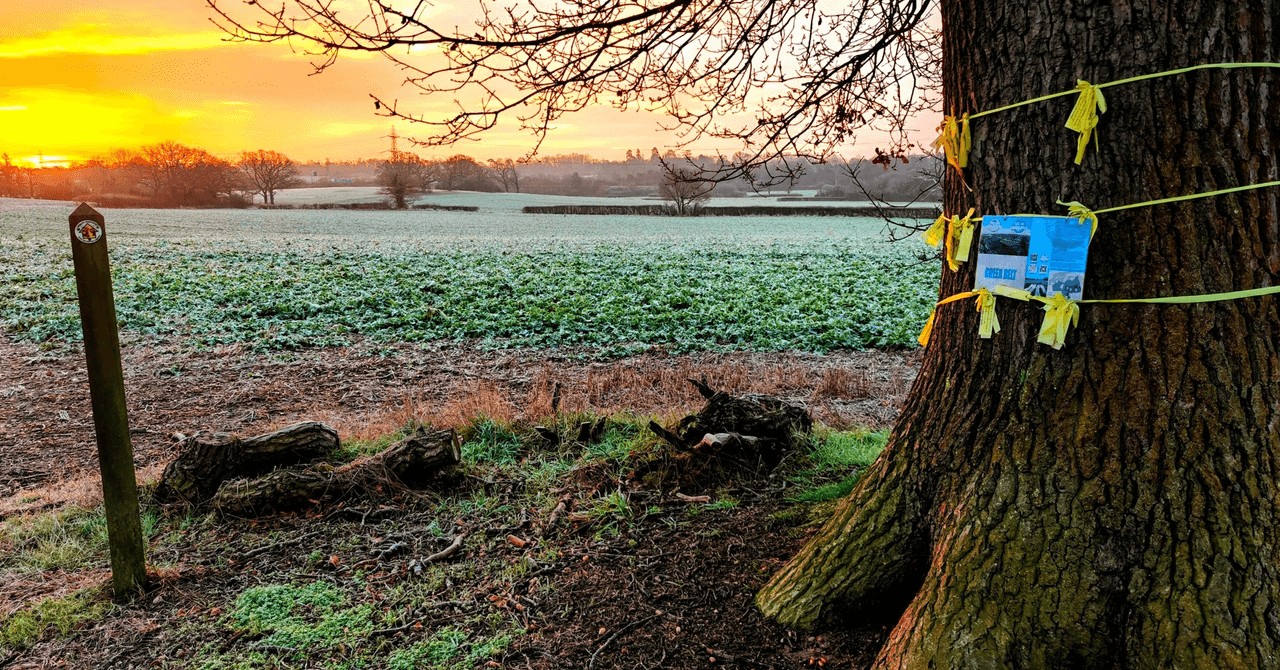
Just north of London, in the quiet countryside surrounding Potters Bar, a battle is unfolding over the future of green spaces. A planned industrial-scale data center—one of Europe’s largest—is set to be built on 85 acres of farmland, igniting fierce opposition from local residents who fear the loss of a vital rural escape. This conflict highlights a growing tension: as the demand for AI infrastructure surges, so too does resistance from communities unwilling to sacrifice their countryside for the sake of technological advancement.
The Fight Over Potters Bar Farmland
In September 2024, a property developer sought permission to construct the massive data center. Locals quickly organized, forming a Facebook group that swelled to over 1,000 members determined to block the project. Despite widespread opposition, the local government granted planning permission in January 2025, and multinational operator Equinix acquired the land the following October, with construction slated to begin this year.
Residents, including Ros Naylor, one of the protest group’s administrators, argue that the proposed development will destroy an invaluable green space that provides both physical and mental wellbeing. “The beauty of walking in this area is coming through this space,” Naylor explains. “It’s incredibly important for mental health.” This sentiment reflects a broader concern: that the relentless push for AI infrastructure is trampling over quality of life for those living nearby.
The Rise of the “Grey Belt”
The conflict in Potters Bar is not isolated. The UK government, under pressure to accommodate the voracious appetite of AI companies, has introduced a new land classification—the “grey belt”—designating underperforming green belt areas as prime locations for development. Simultaneously, data centers have been classified as “critical national infrastructure,” streamlining approval processes.
This policy shift has opened the floodgates for new facilities across the UK, with AI labs planning to invest trillions in infrastructure globally. However, wherever these projects emerge, organized resistance follows.
Local officials, like Jeremy Newmark of Hertsmere Borough Council, dismiss concerns as “slightly romantic,” arguing that the farmland in question is “very low-performing.” This stance ignores the broader implications of prioritizing economic growth over community wellbeing.
Steamrolled by the Process
Protestors accuse the council of disregarding local concerns. Despite submitting hundreds of objections—outnumbering support by almost two-to-one—planning permission was granted anyway. Attempts to overturn the decision through appeals, complaints, and ombudsman investigations have failed.
Council leader Newmark defends the process, claiming that each application is considered in isolation, even though a neighboring housing development was recently vetoed to preserve green belt land. This inconsistency fuels accusations of favoritism toward the property developer.
The Economic Argument
The local government and Equinix tout the economic benefits of the data center, estimating over $5 billion in investment, 2,500 construction jobs, and 200 permanent positions. The facility is also projected to generate roughly $27 million in annual property tax, half of which will go to local services.
Equinix insists that half of the site will remain green space, with plans for biodiversity enhancements like ponds and wetlands. However, for residents like Janet Longley, the dismissal of their concerns feels deeply unfair. “I don’t like the idea of being a NIMBY, because we need these things,” she admits, “but…I resent the fact this is being dismissed as dispensable.”
A Filibuster Strategy
Facing an uphill battle, the protest group is adopting a strategy of delay, lodging objections at every possible stage. Experts like Michael Batty of University College London note that public opposition can significantly impact the planning process in Britain.
Equinix, however, remains confident. Andrew Higgins, global head of masterplanning and sustainability at Equinix, states that no planning permission for their sites has ever been withdrawn.
The clash in Potters Bar is a microcosm of a larger trend: as AI becomes more central to the global economy, communities will increasingly find themselves forced to choose between progress and preservation. The outcome in this case remains uncertain, but one thing is clear: the fight over the future of rural England is far from over.
The reality is that the expansion of AI infrastructure is reshaping landscapes and disrupting lives in ways that demand scrutiny. Ignoring the human cost of this development is not only short-sighted but fundamentally unsustainable.