
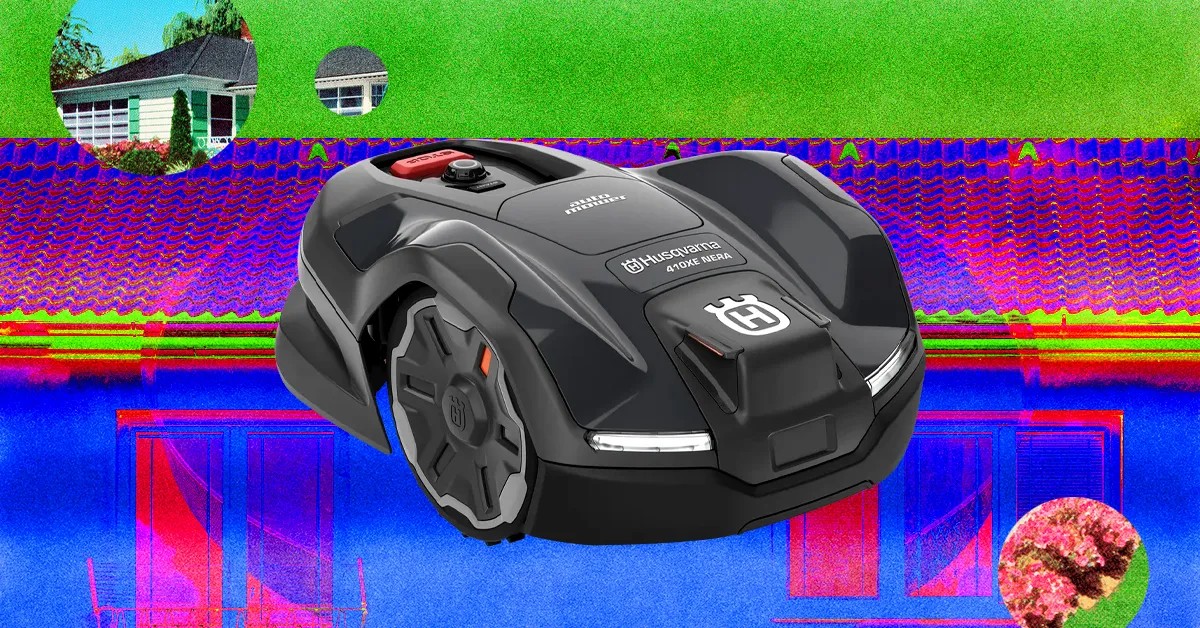
For years, the promise of a robot lawn mower was a dream deferred. Early models were notorious for leaving “unmown islands” of grass, getting stuck in flowerbeds, and turning manicured lawns into muddy, churned-up messes. However, a significant technological shift has occurred. While budget models still struggle, high-end robot mowers have matured into sophisticated, reliable tools capable of maintaining a pristine lawn with minimal human intervention.
The Navigation Revolution: How They Find Their Way
The primary reason early robot mowers failed was poor navigation. They lacked “spatial awareness,” often wandering aimlessly or failing to find their charging docks. The industry has moved through several distinct technological eras to solve this:
- Boundary Wires (The Legacy Method): Older or cheaper models require a physical wire buried around the perimeter of the lawn. This is labor-intensive to install and struggles with complex yard shapes.
- Satellite (RTK-GPS): High-end models now use Real-Time Kinematic GPS. By communicating with satellites, these mowers can navigate with inch-perfect precision. However, they can struggle in areas with heavy tree cover or tall buildings that block signals.
- LiDAR (Laser Mapping): Borrowing technology from self-driving cars, LiDAR uses laser pulses to create 3D maps of the terrain. This allows the mower to navigate effectively even under thick canopies where GPS fails.
- AI Vision (Camera-Based): The newest frontier involves using cameras and artificial intelligence to “see” the world. These mowers can identify obstacles like toys, pets, or even pet waste.
The Trend: The most advanced machines, such as those from Mammotion or Husqvarna, no longer rely on a single method. They use a hybrid approach, combining GPS, LiDAR, and AI to ensure they can navigate complex environments reliably.
Overcoming Physical Obstacles
Beyond just finding a path, modern mowers are tackling the physical realities of gardening:
Terrain and Grip
Early robots were easily defeated by hills or bumpy ground. Today, many premium models feature all-wheel drive (AWD) or interchangeable tires designed for high-traction on steep inclines. This makes them much more viable for properties that aren’t perfectly flat.
The “Edge” Problem
Historically, robot mowers were terrible at cutting near borders, often leaving a thick strip of uncut grass. Engineers are addressing this through hardware design, such as:
– Offset blades that sit closer to the machine’s edge.
– Overhanging chassis sections that extend past the wheels to reach corners.
– Integrated trimmers (though these remain a specialized feature).
Weather and Lawn Health
One of the biggest complaints about early models was their tendency to turn a wet lawn into a mud pit. Modern sensors now include rain detection, allowing the mower to return to its dock during storms. Furthermore, improved weight distribution and traction control prevent the “churning” effect that once ruined grass health during damp conditions.
Aesthetic Customization
Mowing is no longer just about cutting grass; it is about presentation. Advanced software now allows users to dictate the style of the cut via smartphone apps. Homeowners can choose from:
– Wimbledon Stripes: Alternating light and dark strips.
– Geometric Patterns: Spirals, checkerboards, or specific row directions.
The Bottom Line: If you are looking for a “set it and forget it” solution, the technology has finally caught up to the promise. While entry-level models still require significant supervision, premium robot mowers have transitioned from experimental gadgets to professional-grade landscaping tools.
Conclusion: The leap from boundary-wire models to AI-driven, multi-sensor robots has transformed robotic mowing from a frustrating chore into a highly efficient, customizable service. While perfection is still a work in progress—particularly regarding edge cutting and extreme obstacle avoidance—the high-end market is now ready for mainstream adoption.