



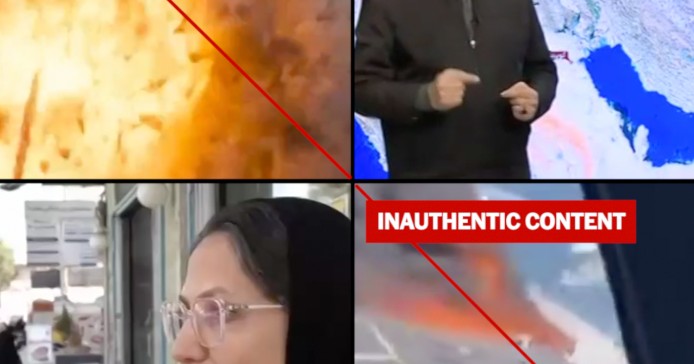
Iran is actively engaged in an aggressive information campaign alongside its military actions, utilizing state-controlled media and social networks to project an image of resilience and even victory despite significant attacks from Israel and the United States. This effort blends factual reporting with exaggerated or entirely fabricated claims, including AI-generated content, to shape public perception both domestically and internationally.
The Fabricated Narrative
According to Iranian state media, retaliatory strikes have inflicted heavy damage on Israeli cities like Tel Aviv and have even sunk an American aircraft carrier with hundreds of casualties at regional bases and embassies. These messages reinforce a narrative of strength and success, presenting Iran as not merely resisting but prevailing in the conflict.
However, this portrayal diverges sharply from reality. While Iranian counteroffensives have caused damage to Israeli cities and American facilities, the actual extent of destruction and fatalities is far lower than what is reported by state-controlled outlets.
“Iran is flooding the zone with content that projects strength in the wake of attacks, while simultaneously distorting the picture of what is actually happening inside the country,” explains Moustafa Ayad, a researcher at the Institute for Strategic Dialogue.
The Rise of AI-Driven Disinformation
The use of social media and artificial intelligence has amplified the reach and effectiveness of influence campaigns. This strategy mirrors tactics employed by Russia in Ukraine, with Iran adopting similar methods as an ally. The integration of AI allows for the rapid production of convincing but false content, making it harder to distinguish between reality and propaganda.
Countermeasures and Limitations
Western adversaries, including the United States and Israel, are actively working to debunk Iranian claims. Israel has directly targeted Iran’s state broadcasting infrastructure in airstrikes, while both nations have selectively managed information about their own damages to control the narrative.
However, despite these countermeasures, the pervasive nature of social media and AI-generated disinformation presents a significant challenge. The ability to quickly disseminate false or exaggerated reports makes it difficult to counter the spread of misinformation, particularly in regions with limited media literacy or restricted access to independent journalism.
Ultimately, Iran’s information warfare strategy underscores the growing importance of media manipulation in modern conflicts. By controlling the narrative, the country aims to bolster domestic morale, undermine its adversaries, and shape international opinion in its favor.


