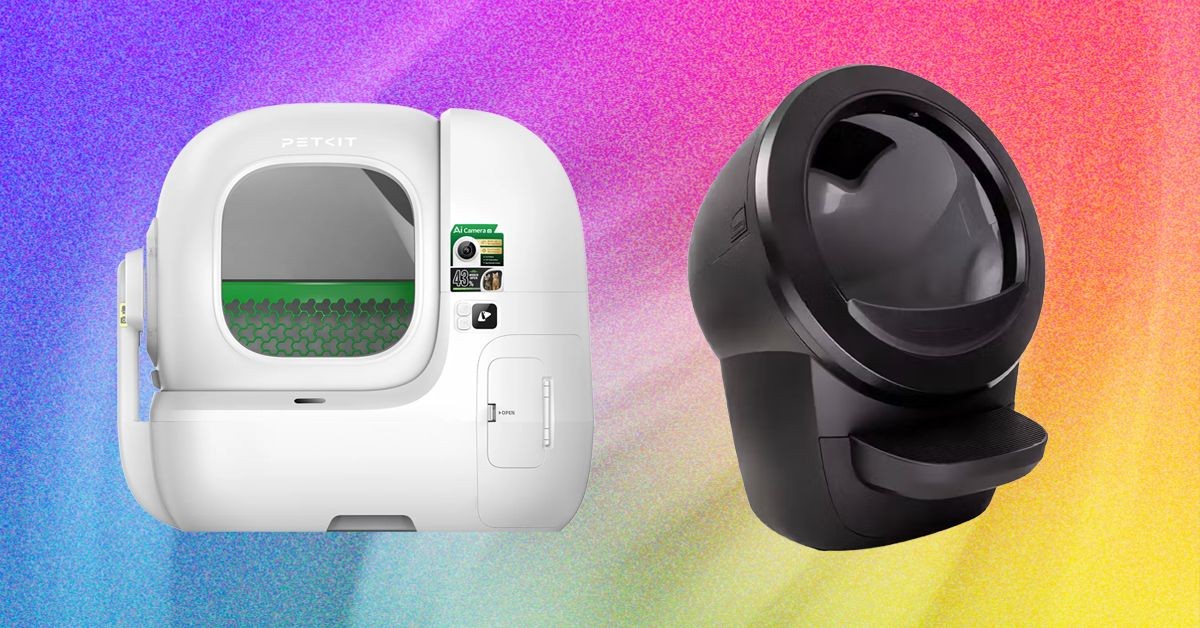
The market for automatic litter boxes has exploded, promising pet owners a life free from the daily chore of scooping. However, as our testing reveals, “automatic” does not always mean “hassle-free.” While these devices can significantly reduce odor and manual labor, they often come with a steep learning curve, buggy software, and occasional safety concerns.
From high-end smart systems to budget-friendly rotating globes, here is our professional breakdown of the top contenders and the models you should avoid.
🏆 Top Recommendations
The Premium Choice: Litter-Robot 5 ($799)
The Litter-Robot remains a heavyweight in the industry, primarily due to its spacious design and high capacity.
* Pros: Large entry opening (better for cats of all sizes), easy assembly, and a waste bin that can hold a week’s worth of waste for two cats.
* Cons: The software currently struggles with “phantom” error codes (like Laser Board Fault ) that cannot be resolved via the app, requiring manual troubleshooting. New features like WasteID (distinguishing urine from feces) and cat-specific weight tracking are still in the early, inconsistent stages of rollout.
* Verdict: If you can overlook some firmware growing pains, its superior physical design makes it a top-tier pick.
The Budget-Friendly Performer: Els Pet Orbitie ($280)
For those seeking an entry-level automatic box, the Orbitie offers impressive functionality at a lower price point.
* Pros: A generous 12×12 inch opening and a straightforward rotating orb design. It is easy for cats to adopt, even those used to traditional boxes.
* Cons: The waste bin fills quickly (often every two days), and litter can occasionally migrate into the gears, causing grinding noises.
* Verdict: A solid, reliable option for multi-cat households on a budget, provided you don’t mind frequent waste disposal.
The User-Friendly Pick: FurryTail Automatic Litter Box Pro ($270)
This model excels in ease of use and immediate “cat acceptance.”
* Pros: Very easy setup; includes a year of waste liners and a litter-tracking mat. The waste bin is conveniently located on top of the unit.
* Cons: The companion app is significantly flawed, often failing to track usage or respond to manual cleaning commands. Sensors can also be overly sensitive, detecting “ghost cats” and halting cleaning cycles.
* Verdict: A great hardware choice that is currently being held back by underwhelming software.
The Mid-Range Contender: PetSafe ScoopFree SmartSpin ($370)
This is a functional, “no-frills” automatic option that feels more accessible than the ultra-premium models.
* Pros: Easy to assemble and features a helpful app that tracks weight and visit frequency. It even includes a built-in deodorizer.
* Cons: The build quality feels somewhat inexpensive compared to higher-end models.
* Verdict: A reliable, mid-priced choice for owners who want smart tracking without the $800 price tag.
🔍 Other Notable Mentions
- Petcove PurrTek ($288): A compact option that works well for large cats, but suffers from poor app translation and a slow cleaning cycle (approx. 4.5 minutes).
- Casa Leo Leo’s Loo Too ($800): A high-tech marvel featuring UV sanitation and radar sensors. However, it is quite expensive, and the small entry hole makes refilling litter a cumbersome task.
⚠️ Models to Avoid (Safety & Reliability Concerns)
In our testing, several models failed to meet basic safety or usability standards. We do not recommend the following:
The Safety Risk: Petlibro Luma & PetSnowy Snow+
Both of these models share a critical design flaw: the globe closes completely during the cleaning cycle.
* If a sensor malfunctions, a cat could be trapped inside a moving mechanism.
* The Petlibro Luma also features an incredibly loud auto-deodorizing function that cannot be silenced, and the PetSnowy is bulky and difficult for older cats to navigate.
The Inefficient Choice: The Pet Zone Smart Scoop ($166)
This model uses a mechanical rake rather than a rotating globe.
* Why it fails: The rake does not stop even if a cat enters the box, posing a safety risk. Furthermore, the shallow litter depth (only 1.5 inches) prevents proper clumping, leading to a messy and ineffective cleaning process.
💡 Final Summary
When choosing an automatic litter box, prioritize safety and software reliability over flashy features. A box that closes during cleaning or relies on a buggy app can transform a convenience into a daily frustration. For most owners, the Litter-Robot 5 or the Els Pet Orbitie offer the best balance of physical design and functional automation.