
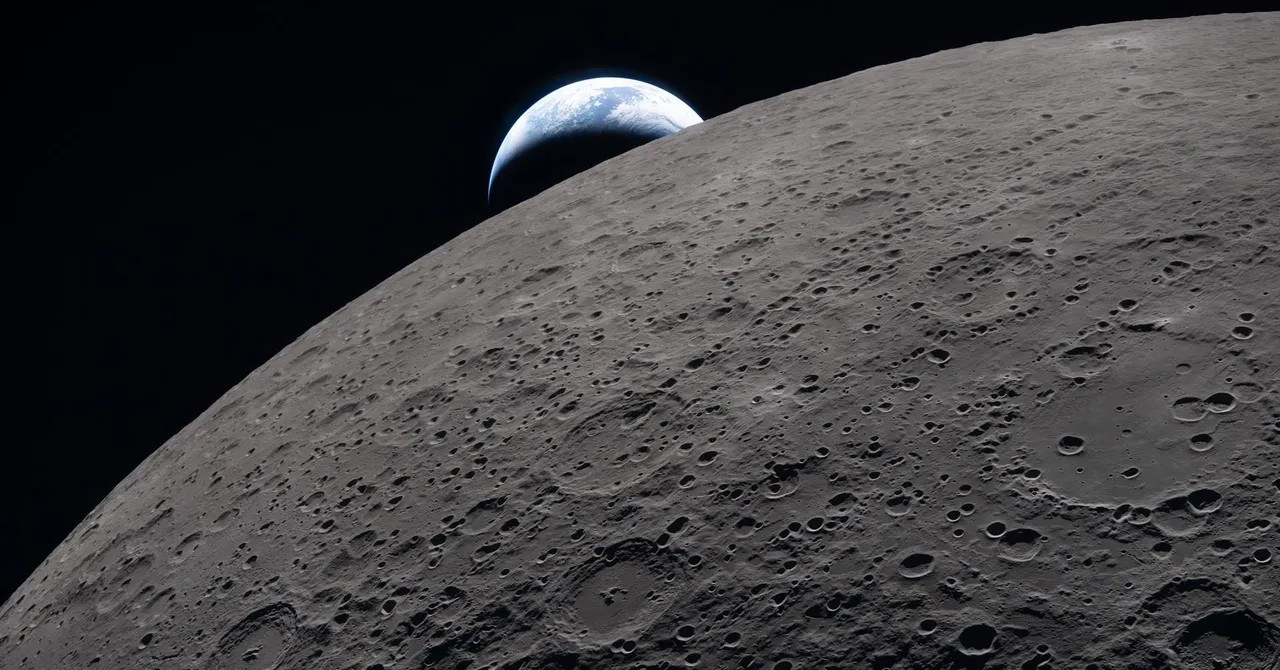
The Artemis II mission is currently underway, marking a historic milestone in lunar exploration. While the crew will not land on the lunar surface during this mission, their trajectory will take them further from Earth than any human being in history. As the spacecraft approaches the far side of the Moon, the mission serves as a critical “test flight” for the systems, hardware, and human endurance required for future lunar landings.
A Record-Breaking Journey
The mission is defined by its unprecedented scale. The crew is traveling on a trajectory that will bring them within 7,000 kilometers of the lunar surface, eventually reaching a distance of approximately 10,300 kilometers beyond the Moon.
This flight path is not merely a transit route; it is a massive engineering feat. By navigating this specific trajectory, NASA is testing the deep-space communication and navigation protocols necessary for long-duration missions. The mission’s primary goal is to validate the Orion spacecraft’s ability to sustain life in the harsh environment of deep space.
Real-World Challenges in Deep Space
Despite the high-tech nature of the mission, the crew has encountered the kind of mundane—yet critical—technical hurdles that often plague complex systems:
- System Reliability: Astronauts have been tasked with troubleshooting hardware on the fly, including attempts to repair the spacecraft’s waste management system (the toilet).
- Software Glitches: Even in the vacuum of space, digital infrastructure remains a vulnerability. The mission commander reported issues with Microsoft Outlook, highlighting how even standard Earth-based software can present challenges when integrated into mission hardware.
- Environmental Hazards: The crew has already witnessed six meteorites colliding with the Moon, a stark reminder of the debris-filled environment that future lunar inhabitants will need to navigate.
Why This Mission Matters
Artemis II is much more than a flyby; it is a bridge between the Apollo era and a permanent human presence on the Moon. By sending humans to the lunar far side, NASA is gathering essential data on:
- Lunar Mysteries: The Moon is far from a dead rock. These missions aim to solve long-standing scientific questions regarding lunar composition and its geological history.
- Human Endurance: Testing how the human body and psychological state react to the extreme distances and isolation of deep space.
- System Readiness: Ensuring that life-support, communication, and navigation systems can function reliably far beyond Earth’s protective magnetosphere.
The success of Artemis II will determine whether humanity is truly prepared to establish a sustained presence on the Moon and, eventually, Mars.
Conclusion
Artemis II represents a pivotal shift from orbiting Earth to exploring the deep solar system. While technical glitches and environmental hazards provide immediate challenges, the mission’s successful navigation of the lunar far side will lay the groundwork for the next era of human discovery.