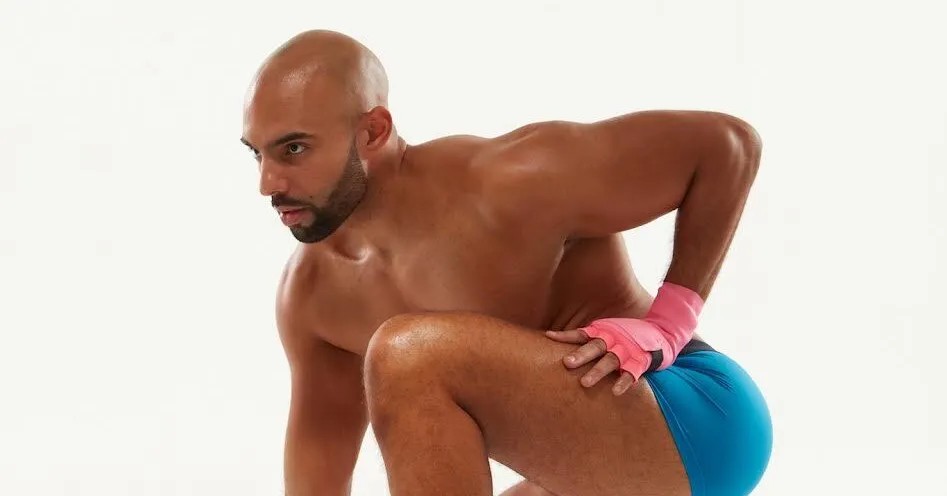
Last month, the online casino Duel broadcast a live blackjack game that was supposed to be hosted by Andrew Tate. The man sitting at the table bore a striking resemblance to the controversial influencer—bald head, dark stubble, sunglasses, and a tight suit. But as the stream progressed, the expected macho bravado never arrived. Instead, the dealer broke into song, performed vigorous twerking routines, executed a full split on the blackjack table, and spontaneously kissed his male assistant.
The clip went viral instantly. Duel’s founder, Ossi Ketola, initially claimed the casino had been “rugged” (scammed) by an agency that substituted an impostor for the real Tate. However, the man in question is not an accidental lookalike or a fraudster. He is Brian Michael Hinds, a 29-year-old social media star known as “Bottom G.”
Hinds reveals that Duel hired him intentionally. The incident highlights a surreal phenomenon in the digital age: a gay pop star who has built a lucrative career by embodying the exact opposite of Andrew Tate, using their physical resemblance as a vehicle for queer joy and musical promotion.
The Origin of ‘Bottom G’
Brian Michael Hinds is a half-German, half-Barbadian artist whose resume includes performing on Deutschland sucht den Superstar (Germany’s American Idol ) and dancing at the Moulin Rouge in Paris. He launched his social media presence in 2022 as a street dancer to promote his music.
Soon after, comments began flooding his accounts comparing his appearance to Andrew Tate. Initially, Hinds ignored the comparisons. He had not heard of Tate and found the influencer’s content uninteresting. However, recognizing the algorithmic potential, he leaned into the coincidence.
He adopted the persona of “Bottom G,” a deliberate, queer-coded play on Tate’s self-styled title of “Top G.” While Tate projects hyper-masculinity and aggression, Hinds projects flamboyance, vulnerability, and exuberance.
“I didn’t even think about Andrew Tate at all,” Hinds says. “I feel unbothered. With Tate, it’s so important how he’s perceived.”
This contrast—between Tate’s rigid control and Hinds’ carefree authenticity—fascinated internet audiences, turning a simple resemblance into a viral meme.
Monetizing the Contrast
The “Bottom G” persona is not just a joke; it is a viable business model. Hinds’ manager states that live appearances can fetch between $10,000 and $15,000, while major brand deals, such as the Duel casino partnership, can reach six figures.
Despite the financial success, Hinds is careful to maintain his distinct identity. He refuses to become a mere caricature of Tate.
* Fashion as Differentiation: Hinds recently shifted toward “maximalist” fashion to visually separate himself from Tate. For a wedding performance in Thailand, he wore a colorful, quilt-like shirt. “It’s pretty ugly—but it’s something he would never wear, so the job is done,” Hinds explains.
* Boundaries on Impersonation: Some clients have requested that Hinds get temporary tattoos matching those on Tate’s body. Hinds declined, stating that crossing into direct impersonation obscures his individuality.
The strategy appears to be working beyond the meme. Following the viral Duel stream, Hinds received offers to perform in Bangkok and at a Las Vegas wedding. He notes that fans are drawn less to the “Tate look-alike” aspect and more to his joie de vivre.
A Complicated Relationship with the Tates
The connection between Hinds and the Tate brothers is more nuanced than simple rivalry. In 2022, Hinds claims Tristan Tate messaged him on Instagram to support his work. Later, Andrew Tate allegedly called Hinds from Dubai to ask if he was the artist behind the song “Can We Talk About Us.”
The Tate brothers subsequently posted videos of themselves dancing to the track in a sports car. The song remains Hinds’ most popular, with nearly 4 million streams on Spotify. This organic endorsement provided significant exposure, though it also tied Hinds’ brand to the Tates’ controversial legal and reputational issues.
(Note: Andrew and Tristan Tate have faced charges of rape and human trafficking in multiple countries, including the UK, all of which they deny.)
The Hidden Costs of Virality
While the association brought fame, it also carried significant risks. Hinds speculates that his close digital proximity to the Tates led to the deletion of several of his social media accounts, particularly on TikTok, due to platform moderation policies.
“November last year, I was like, ‘I hate Bottom G,’ he says. “‘I get deleted. It doesn’t make me as rich as I thought.’”
The anxiety of relying on a parasocial connection to a controversial figure weighed on him. However, the positive reception of the Duel livestream reinvigorated his enthusiasm for the persona. He now views the character as a tool for connection rather than a burden.
Looking Beyond the Meme
Despite the success of the “Bottom G” brand, Hinds is actively working to expand his identity beyond the Tate comparison. He is currently building toward the release of a full-length album. His latest single, “Another Time,” explores themes of disconnection and alienation—emotions inherent to his globe-trotting lifestyle.
“I feel misunderstood all the time,” Hinds says. “This theme of alienation adds a deeper layer to my otherwise carefree image.”
If the influencer economy ever becomes too draining, Hinds has a backup plan rooted in a pre-social media passion: the wig business. Inspired by the transformative power of hairpieces, he recently ordered a new wig to experiment with. It serves as a reminder that beneath the viral fame and the comparisons lies an individual artist seeking creative freedom.
Conclusion
Brian Michael Hinds has successfully navigated the treacherous waters of internet fame by turning a physical resemblance into a platform for queer expression and musical promotion. By embracing the “Bottom G” persona while maintaining strict boundaries on his identity, he has proven that one can monetize a meme without losing oneself in the process.