
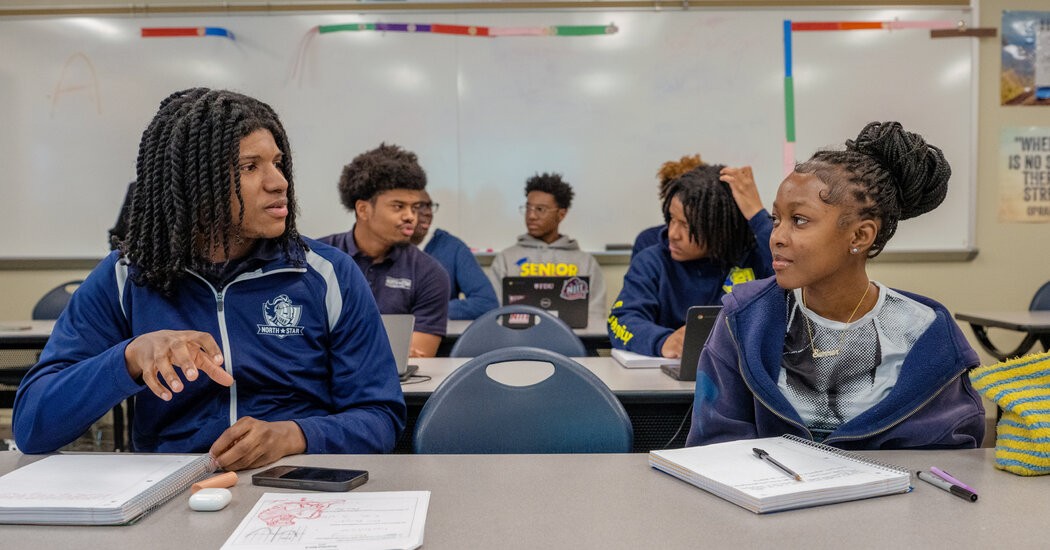
A new course at Washington Park High School in Newark, New Jersey, is tackling a critical skill for the 21st century: understanding artificial intelligence and how it impacts daily life. Unlike traditional computer science classes, this curriculum focuses not on building AI, but on living with it.
The Core Lesson: Who’s Driving Whom?
The first session had students dissect their own interactions with AI-powered platforms. The central question? Are you in control of the technology, or is the technology controlling you? Students shared experiences ranging from actively using AI to verify homework (a proactive approach) to passively consuming algorithmically curated content on platforms like Spotify (where AI dictates the music selection).
This distinction is key: the class isn’t just about using AI tools, but about recognizing when AI is using you. This is a critical skill because AI is now interwoven into nearly every aspect of modern life.
Why AI Literacy Now?
Schools nationwide are scrambling to introduce similar curricula. The reasoning is simple: AI is no longer a future concern, it’s a present reality. Students will enter a workforce where AI-powered tools are used for hiring, performance evaluation, and even content creation. Beyond jobs, AI influences news feeds, social interactions, and purchasing decisions.
“This is the new driver’s ed,” one educator told the New York Times. “Students need to understand how these systems work if they want to navigate the world responsibly.”
Beyond Tools: Ethical Implications
The course isn’t just about technical awareness. It touches on the broader implications of AI, including algorithmic bias, data privacy, and the potential for manipulation. The goal is to empower students not just to use AI, but to critically evaluate it.
This matters because unchecked reliance on AI can reinforce existing inequalities. Algorithms are only as unbiased as the data they’re trained on, and a lack of awareness can leave students vulnerable to manipulation or unfair treatment.
In conclusion, Washington Park High School’s AI literacy course isn’t just an experiment—it’s a necessary adaptation to an increasingly algorithmic world. By teaching students to question, analyze, and control their interactions with AI, the school is preparing them for a future where technological fluency is no longer optional, but essential.