
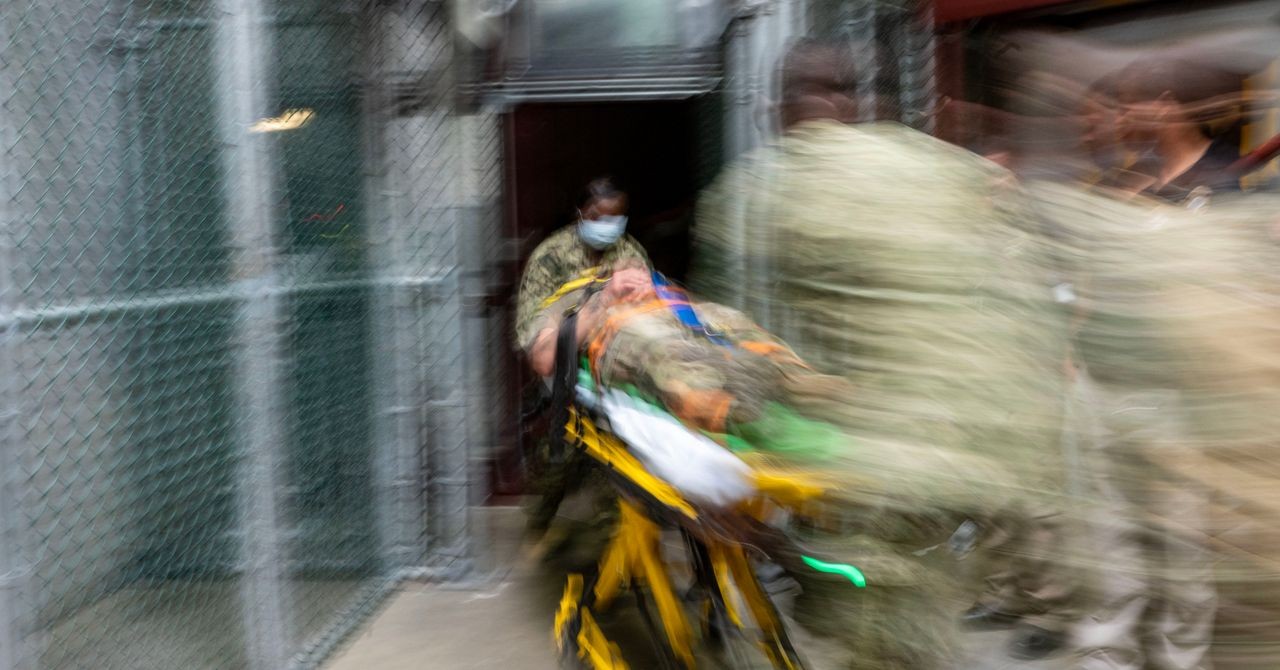
The Trump administration’s decision to deploy Public Health Service (PHS) officers to Guantánamo Bay for immigration detention has triggered a wave of resignations among medical professionals unwilling to participate in what they describe as a manufactured humanitarian crisis. The move, combining former President Trump’s long-held desire to use the offshore base for indefinite detention with a post-inauguration promise to house thousands of noncitizens there, has forced ethical dilemmas on healthcare workers traditionally deployed during emergencies like hurricanes, wildfires, or mass shootings.
The Ethical Breaking Point
Nurses and doctors within the PHS have faced impossible choices: comply with deployment orders or abandon decades of service, including potential pensions. One nurse, Rebekah Stewart, resigned after a decade of service rather than report to Guantánamo, describing the situation as “facilitating a man-made humanitarian crisis.” Her experience is not isolated; colleagues like Dena Bushman also resigned after receiving similar orders, citing moral objections to the administration’s policy. The PHS, while not a military branch, functions as a rapidly deployable medical force, filling gaps in federal agencies and responding to national emergencies. But this flexibility has now been weaponized, forcing professionals to choose between their careers and their ethics.
Conditions at Guantánamo
The detainees, some of whom learned they were in Cuba from the medical staff sent to treat them, are held in facilities like Camp 6, a dark prison with no natural light. Officers working there have described conditions as chaotic and disorganized, with detainees suffering from overcrowding, psychological trauma, and indefinite uncertainty. Despite claims by Homeland Security Secretary Kristi Noem that Guantánamo holds “the worst of the worst,” reports indicate many detainees have no criminal convictions, with some classified as “low-risk” in internal assessments.
Funding and Logistics
The operation is extraordinarily expensive, with the government spending an estimated $16,540 per detainee per day at Guantánamo – far exceeding the $157 daily cost of ICE facilities in the US. Congress has funneled record funding into immigration detention, increasing ICE’s budget from $6.5 billion a decade ago to over $78 billion in 2026. A significant portion of this increase, including $60 million, has been diverted to Guantánamo, raising questions about priorities and sustainability.
Erosion of Public Trust
The PHS deployments undermine the agency’s core mission of responding to public health emergencies. Former officials warn that diverting resources to indefinite detention weakens the nation’s ability to handle crises like pandemics or natural disasters. The forced participation of medical professionals in a highly politicized operation damages public trust in the healthcare system and raises concerns about future deployments.
The Trump administration’s use of Guantánamo for immigration detention represents a fundamental shift in US policy, prioritizing political agendas over ethical considerations and long-term public health security. The resignations of PHS officers are a direct consequence of this decision, signaling a growing crisis of conscience within the federal workforce.