
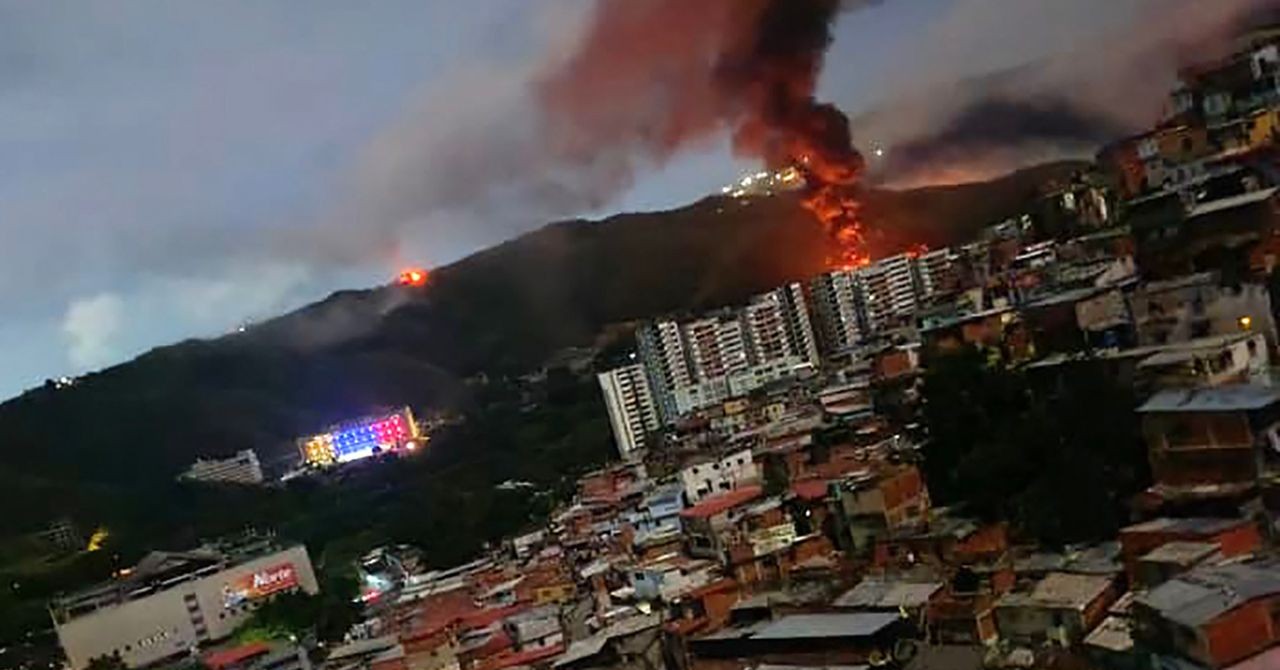
The world is increasingly viewing major events through the lens of 60-second videos, sacrificing depth for immediacy. This trend, exemplified by the recent US intervention in Venezuela, highlights a dangerous shift where social media doesn’t just speed up the spread of information—it constructs reality itself. On January 3rd, US forces conducted a military operation in Caracas, resulting in at least 80 deaths, including 32 Cuban soldiers, and the capture of President Nicolás Maduro, who was subsequently transferred to New York for trial. Within hours, President Trump announced plans to oversee Venezuela until a “satisfactory transition” was achieved, signaling a return to direct US military involvement in Latin America.
The Problem Isn’t Just Speed; It’s Distortion. The rapid-fire dissemination of events on platforms like TikTok and X bypasses traditional fact-checking, creating an environment where narratives, not facts, dominate. This is particularly dangerous in geopolitics, where nuance and historical context are essential. The US intervention in Venezuela, while framed as a response to narcoterrorism, ignores decades of US interference in the region and the complex internal dynamics of the country.
The Collapse of Fact-Checking in the Digital Age
Psychological researcher Julio Juárez at UNAM argues that the speed of social media has “devoured” traditional verification processes. The first reports of the attack acted as a “massive amplifier,” constructing reality rather than simply reporting it. Trump’s narrative, he says, was a deliberate effort to polarize public opinion. The issue isn’t just about false information; it’s about the absence of critical thinking in an environment designed for immediate reaction.
The Venezuelan Perspective. The attack ignited a fierce debate, with Venezuelans expressing mixed reactions. Some celebrated the intervention as a necessary step to remove Maduro, while others condemned it as a violation of sovereignty. As one commenter wrote, “Where was the concern for international law when Maduro starved us and killed our students? … Keep quiet and look the other way.” This raw sentiment underscores the deep-seated frustrations driving the conflict.
The Role of Alternative Narratives
Despite the chaos, alternative voices are attempting to provide context. Tecayahuatzin Mancilla, creator of the satirical Instagram account Historia Para Tontos (“History for Dummies”), argues that the US action raises questions about international law and historical patterns of intervention. His videos, though laced with dark humor, highlight a critical point: the US has repeatedly violated international norms when it suits its interests.
The Underground Information Network. In Venezuela itself, journalist Rafael Uzcategui notes that the “double standard” applied by the international community is infuriating. He points out that human rights concerns are selectively applied, with violations ignored when committed by US allies. Information is now primarily shared through encrypted channels like WhatsApp, as public social media is too risky.
The Future of Discourse: Chaos or Order?
The challenge facing social networks is maintaining order amidst the noise. According to the Digital News Report 2025, 16% of people now turn to TikTok for news, with WhatsApp (19%), Facebook (36%), and YouTube (30%) also playing major roles. Psychologist Petter Törnberg argues that polarization isn’t the result of malicious algorithms but a natural consequence of the platforms’ design. Emotional content thrives, creating echo chambers where critical thinking withers.
“The act of sharing content is often impulsive and deeply partisan… toxicity becomes the organic norm.” — Petter Törnberg
The bottom line: Social media has fundamentally altered how we understand geopolitics. The erosion of fact-checking, combined with algorithmic amplification of emotion, creates a distorted reality where nuance is lost and outrage prevails. Unless critical thinking and reliable sources are prioritized, the world risks being governed by headlines instead of informed debate.