
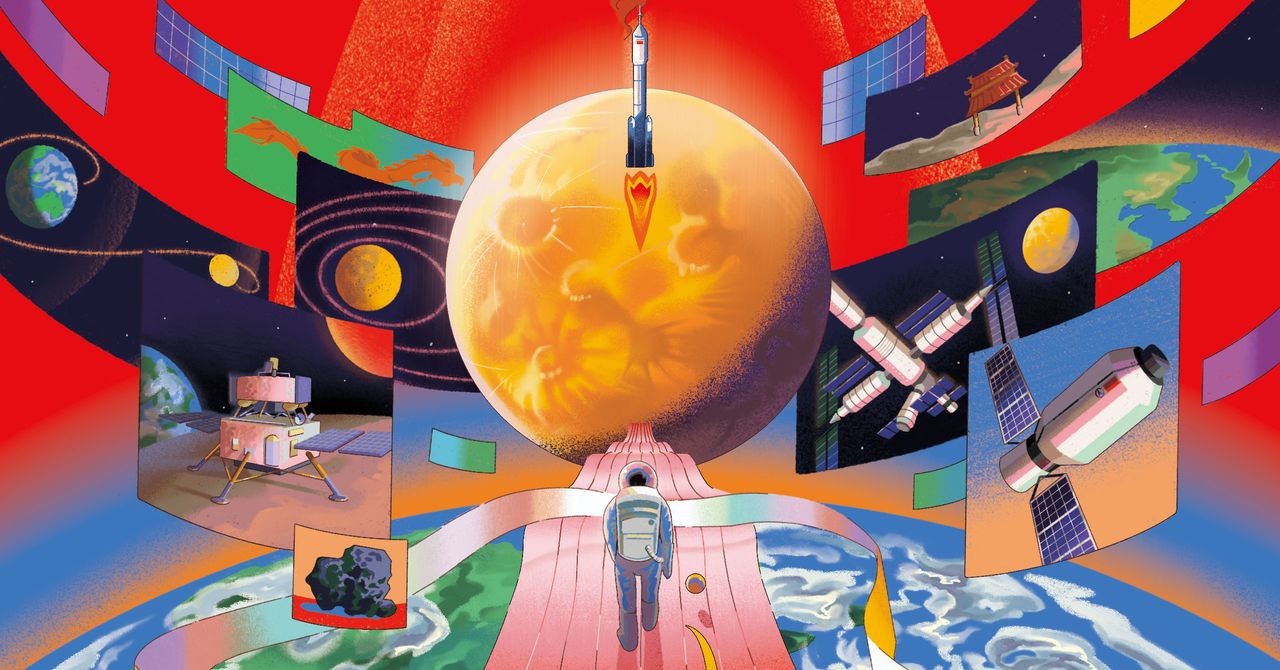
The United States is facing a growing threat of being outpaced by China in the race to return to the moon, a competition that extends far beyond national prestige. The current state of the US space program is plagued by dysfunction, shifting priorities, and political interference, creating an environment where China is likely to achieve a lunar landing first.
Political Interference and Program Chaos
The US effort to return to the moon has been undermined by erratic policy decisions and unrealistic timelines. Former President Trump, driven by the desire for a quick win, arbitrarily accelerated the schedule for lunar landings, setting a 2024 deadline that experts widely deemed impossible. This pressure forced NASA into a chaotic scramble, compromising long-term planning and sustainable development.
The situation was further complicated by bureaucratic infighting, Congressional mandates for outdated technology, and frequent changes in leadership. One NASA official described the program as “an architecture that no NASA administrator that I’m aware of would have selected.” The agency found itself stuck with a patchwork of old and new components, including repurposed space shuttle engines and a capsule from a decades-old project.
China’s Strategic Advantage
While the US grapples with internal hurdles, China has been executing a steady, methodical plan. In late 2023, China successfully returned lunar samples from the far side of the moon for the first time in history, demonstrating its growing capabilities.
China’s approach contrasts sharply with the US’s: Beijing prioritizes reliability over speed, invests in long-term infrastructure, and avoids the kind of political meddling that has crippled NASA. Experts predict that China will land astronauts on the moon before 2030, a timeline that seems increasingly realistic given its consistent progress.
The Stakes Beyond Lunar Landings
The race to the moon is not merely about planting flags. The lunar poles are believed to hold vast reserves of water ice, a potential resource for future space exploration. More importantly, some scientists believe the moon could contain significant deposits of helium-3, a rare isotope that could revolutionize energy production.
If China secures these resources first, it would gain a strategic advantage in the development of fusion power and other advanced technologies. As one former NASA official warned, “If China gets to the moon first, it’ll be more than a point of national pride for Beijing. It’ll be a declaration that the American Century is officially over.”
The US Response
Despite the challenges, the US still possesses significant technological advantages. SpaceX, in particular, has emerged as a key player, offering innovative solutions and a more agile approach than traditional government programs.
However, the US must address its internal dysfunction to remain competitive. This means stabilizing funding, prioritizing long-term planning over short-term political goals, and fostering a more coherent strategy. Without such reforms, the US risks losing not just the space race, but also its position as a global leader in science and technology.
The future of space exploration hinges on whether the US can overcome its self-inflicted wounds and reassert its commitment to a sustainable, well-funded space program. Otherwise, the next giant leap for mankind may very well be taken by China.