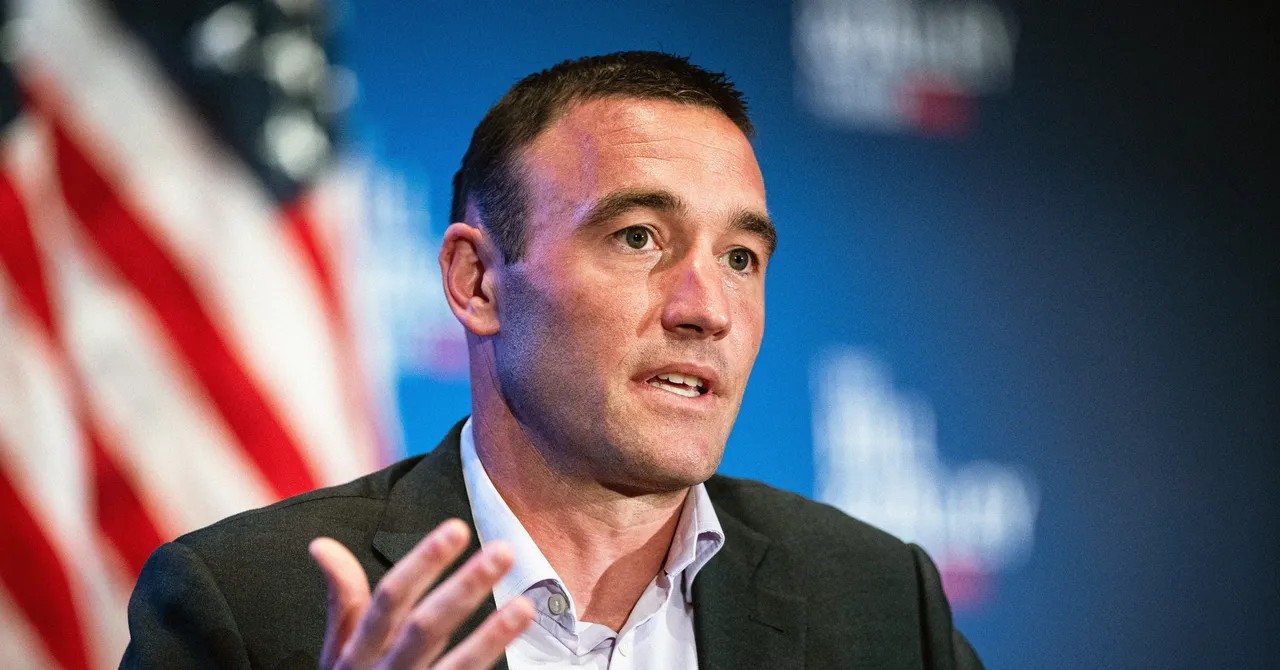
OpenAI is undergoing a significant internal transformation, marked by the departure of several key executives and a strategic pivot toward streamlining its product offerings. The most notable exit is Kevin Weil, the company’s former Chief Product Officer, who is leaving following a period of intense reorganization.
The Departure of Kevin Weil and the End of ‘Prism’
Kevin Weil, a veteran tech executive who previously held leadership roles at Instagram, announced his departure on Friday. His exit coincides with a major shift in how OpenAI handles scientific research.
The specialized initiative Weil was leading, OpenAI for Science, is being decentralized. Its core components are being integrated into other research and infrastructure teams across the company. This move includes the sunsetting of Prism, a web application launched in January designed to assist scientists in their workflows.
Rather than maintaining Prism as a standalone tool, OpenAI plans to:
– Fold the roughly 10-person Prism team under Thibault Sottiaux, head of Codex.
– Integrate Prism’s capabilities directly into the Codex desktop app.
This transition reflects a broader ambition to transform Codex—OpenAI’s AI coding tool—into an “everything app,” centralizing various specialized capabilities into a single, powerful platform.
A Pattern of Leadership Turnover
Weil is not the only high-level departure this week. OpenAI is facing a wave of executive exits that signal a period of profound instability or transition:
- Srinivas Narayanan: The Chief Technology Officer of Enterprise Applications is leaving to spend time with his family.
- Bill Peebles: The head of the Sora video-generation project has also departed the company.
These exits follow a recent period of significant upheaval within the leadership tier. The company has already seen shifts including the medical leave of AGI Deployment CEO Fidji Simo, a leave of absence for CMO Kate Rouch, and the transition of COO Brad Lightcap into a “special projects” role.
Strategic Pivot: From “Scrappy Startup” to Enterprise Powerhouse
The current instability appears to be a byproduct of OpenAI’s evolution from a research-focused startup into a massive commercial platform. This transition is driven by several critical factors:
- Market Pressure: OpenAI faces intensifying competition from rivals like Anthropic and is reportedly preparing for a potential IPO later this year.
- Product Simplification: To compete effectively, the company is moving away from experimental or fragmented tools—such as the discontinuation of the Sora app—to focus on high-impact areas like enterprise offerings and coding.
- Operational Maturity: CEO Sam Altman recently acknowledged the “intense, chaotic, and high-pressure” nature of recent years, noting that as a “major platform,” the company must now operate with more predictability.
While some specialized projects like “OpenAI for Science” are being dispersed, the company maintains that its commitment to scientific discovery remains a priority, evidenced by the recent announcement of GPT-Rosalind, a new model series specifically designed for life sciences researchers.
“I am also very aware that OpenAI is now a major platform, not a scrappy startup, and we need to operate in a more predictable way now,” — Sam Altman, CEO of OpenAI
Conclusion
OpenAI is currently trading its experimental, multi-product approach for a more unified and disciplined commercial strategy. While the departure of key executives and the dissolution of specialized teams like Prism suggest internal turbulence, these moves appear designed to consolidate resources toward the company’s most profitable and scalable frontiers: enterprise AI and advanced coding tools.