
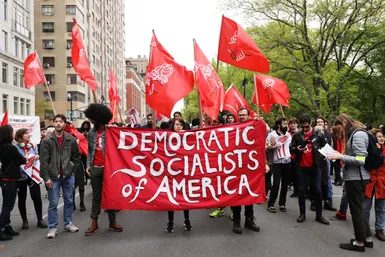
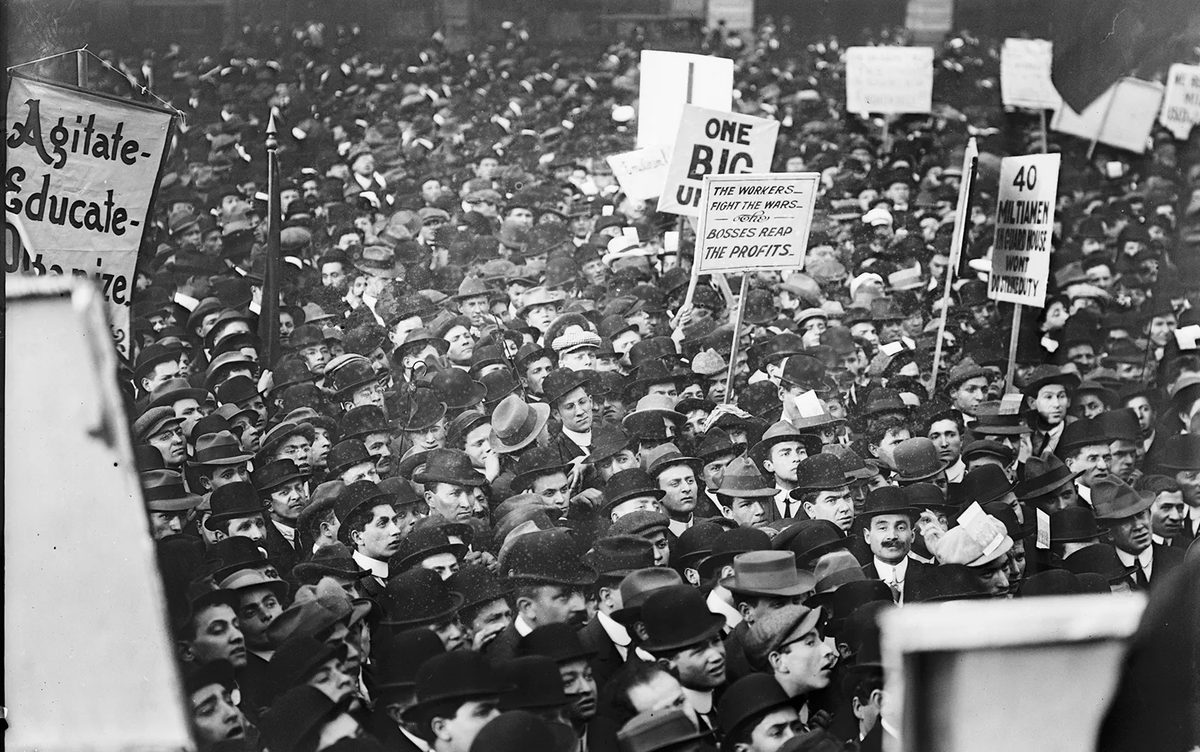
People marching on May Day in New York City in 2019. Spencer Platt/Getty Images.
Socialism is an economic and social doctrine that prioritizes public ownership or control of property and natural resources over private interests. The core belief is that individuals do not exist in isolation. We live and work in cooperation. Because of this interdependence, everything produced is viewed as a social product.
Everyone who contributes to production deserves a share. Society should own or control property for the benefit of all members. This stands in direct opposition to capitalism.
The Conflict With Capitalism
Capitalism relies on private ownership of the means of production. It allows individual choices in a free market to determine how goods are distributed. Socialists argue this system naturally leads to unfair concentrations of wealth.
Power concentrates in the hands of a few who win free-market competition. These people use their wealth to reinforce their dominance. They choose where to live and how to live. This limits options for the poor.
Terms like individual freedom and equality of opportunity ring hollow for working people. If you must do a capitalist’s bidding to survive, you are not truly free.
True freedom and equality require social control of the resources that provide the basis for prosperity. Karl Marx and Friedrich Engels stated this clearly in the Manifesto of the Communist Party (1848). They wrote that in a socialist society, “the condition for the free development of each is the free development of all.”
Where Do Socialists Disagree?
This fundamental conviction leaves room for significant disagreement among socialists. Two key points cause the most friction.
The first is the extent of property society should own. Some believe almost everything should be public property. Personal items like clothing are the only exception. English humanist Sir Thomas More envisioned this in Utopia (1516).
Others accept private ownership of farms, shops, and small or medium-sized businesses. They do not view all private property as inherently exploitative.
“The condition for the free development of each is the free development of all.”
— Karl Marx and Friedrich Engels, Manifesto of the Communist Party (1848)
Centralism vs. Decentralism
The second disagreement concerns how society exercises control. The camps here are loosely defined as centralists and decentralists.
Centralists want public control invested in a central authority. This is often the state. In some cases, it is the state guided by a political party. The Soviet Union is a primary example of this approach.
Decentralists believe decisions should be made at the lowest possible level. Local people who are most directly affected by resource use should make the choices.
This conflict has persisted throughout the history of socialism as a political movement. It remains unresolved. The debate over who controls what and how continues to shape economic policy discussions today.
Socialism didn’t start in a factory. It started in a field. The movement as a political force is tied to the Industrial Revolution, but the ideas behind it? Those go back further. Way further. Some histories even trace them to Moses. Ancient Greek philosophers had them too. Plato’s Republic describes a guardian class that shares everything. Goods. Spouses. Children. It’s austere. It’s communal.
Early Christian communities practiced a simpler version. Sharing goods. Sharing labor. Monastic orders still do it today. Thomas More combined Platonism and Christianity in Utopia. The book isn’t really a blueprint for a socialist state. It’s a critique of his own society. More saw pride, envy, and greed tearing his world apart. So he imagined an island where land and houses are common property.
Everyone works on communal farms for two years. They move houses every ten years to stop anyone from getting too attached to their stuff. Money is gone. You just take what you need from storehouses. The whole society works only a few hours a day. The rest is for leisure. It sounds nice until you realize it’s a commentary on the failings of 16th-century Christian society.
Ideas don’t stay on paper for long. Religious and political turmoil turned Utopia into a call to action. During the Protestant Reformation, the Anabaptists tried to set up a common ownership regime in Münster. It was brief. Violent. The Diggers in England came next. After the Civil Wars (1642–51), they claimed God made the world for sharing, not for private profit. They dug up common land to plant crops. Oliver Cromwell’s Protectorate didn’t like that. They forcibly disbanded the group.
These early visions were agrarian. That stayed true through the French Revolution. François-Noël Babeuf, a journalist and radical, argued the Revolution betrayed its own ideals. Liberty, equality, fraternity. He focused on equality. To him, that meant abolishing private property and sharing the land’s fruits. He conspired to overthrow the government. He was executed.
But the publicity of his trial made him a hero. Nineteenth-century radicals who hated industrial capitalism looked at Babeuf and saw a martyr.
From Agrarian Dreams to Industrial Critique
The term socialist entered the lexicon around 1830. It described the radicals who wanted to divorce industrial power from capitalism. Conservatives were outraged by industrialism too. They hated how it disrupted settled agricultural life. They despised the squalor of industrial cities. But radicals were different. They wanted equality. They believed people could use science and history to build a new society.
Moral outrage at worker pauperism wasn’t enough. They needed a plan.
Claude-Henri de Saint-Simon was one of the first to call himself a socialist. A French aristocrat. He didn’t want public ownership of productive property. He wanted public control through central planning. His vision? Scientists, industrialists, and engineers directing society’s energies. They would anticipate needs. They would drive efficiency.
Saint-Simon thought this system beat capitalism. He even said history endorsed it. He believed history moves in stages. Each stage has specific social classes and dominant beliefs. Feudalism had landed nobility and monotheistic religion. Industrialism relies on science, reason, and division of labor.
So why not let the most knowledgeable and productive members run the economy? Saint-Simon argued that in an industrial society, economic arrangements should be in the hands of experts. They could direct production for everyone’s benefit. It wasn’t about seizing the means of production. It was about managing them better.
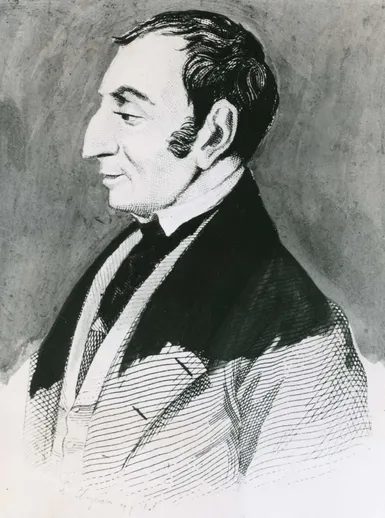

Robert Owen wasn’t a theorist sitting in an ivory tower. He was an industrialist with his hands in the machinery. While Henri de Saint-Simon was sketching out early socialist ideas, Owen was proving them on the factory floor.
His reputation began in New Lanark, Scotland. It was a textile mill operation that made money. A lot of it. But it also broke the mold of early 19th-century labor.
Owen refused to employ children under ten. By the standards of the era, that was radical. The mill was highly profitable. It was also remarkably humane. He didn’t do it for charity. He did it because he believed a specific premise about how people work.
Human nature is not fixed. It is formed.
If people act selfish, vicious, or depraved, Owen argued, it is because their social conditions demand it. Change the environment. Change the person. Teach them to live and work in harmony. They will.
This belief drove him across the Atlantic. In 1825, Owen purchased land in Indiana. He established New Harmony. The goal was a self-sufficient cooperative community. Property would be commonly owned. It was a test case for social organization on a large scale.
The project collapsed within a few years. Owen lost most of his fortune. The experiment failed.
But he didn’t stop. He didn’t retreat into bitterness. He pivoted. Owen turned his attention to building the infrastructure for cooperation. He focused heavily on trade unions. He pushed for cooperative businesses.
The lesson wasn’t that utopias work. The lesson was that social structures shape behavior. Owen spent the rest of his life trying to build systems where that shaping could happen naturally. Not through force. Through design.
We still argue about whether human nature is innate or learned. Owen bet the farm on the latter.
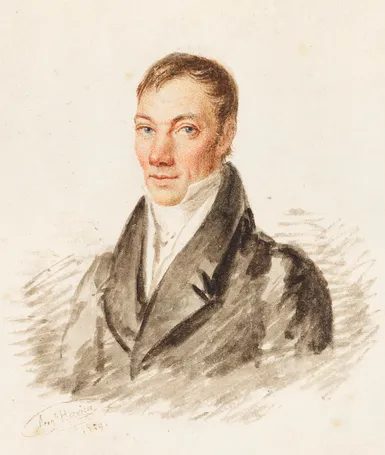

Robert Owen’s vision wasn’t alone. François-Marie-Charles Fourier, a French clerk, matched Owen’s extravagance in imagination if not in bank balance. He argued that modern society was fundamentally broken. Institutions like marriage and the competitive market forced people into repetitive labor. This confinement bred selfishness and deception. It frustrated the human need for variety.
The market, specifically, pitted individuals against one another for profit. That competition killed harmony. Fourier wanted a society aligned with actual human desires. He called it the phalanstery.
How Fourier’s phalanstery worked
The phalanstery was a self-sufficient community of roughly 1,600 people. It operated on a principle called attractive labor. The idea was simple: people work voluntarily and happily when their tasks engage their talents and interests. But let’s be realistic. Even enjoyable tasks get boring. So, each member held several occupations. They moved from one role to another as interest waned and waxed.
Private investment was allowed. But ownership was shared. Inequality existed, though it was capped.
The failure of Icaria
These themes of common ownership and simplicity appeared in Étienne Cabet’s 1840 novel, Voyage en Icarie. The book described a self-sufficient community of one million people, blending industry with farming.
Theory meets reality is often messy. The actual Icaria Cabet founded in Illinois in the 1850s was tiny—closer in size to a Fourierist phalanstery than the million-person utopia described in his book. Dissension tore the group apart. Cabet left in 1856.
Other early socialists: Blanc, Blanqui, and Proudhon
By the 1830s and 1840s, other French socialists were agitating. Louis Blanc, Louis-Auguste Blanqui, and Pierre-Joseph Proudhon each had distinct visions.
Blanc authored L’Organisation du travail. He promoted state-financed, worker-controlled “social workshops.” The goal was to guarantee work for everyone. This would gradually lead to a socialist society.
Blanqui was different. He was a revolutionary. He spent over 33 years in prison for insurrectionary activities. His strategy was stark: socialism requires seizing state power. This must be done by a small group of conspirators. Once in power, they would establish a temporary dictatorship. They would confiscate wealthy property and take control of major industries.
Pierre-Joseph Proudhon took a different angle. In What Is Property? (1840), he famously declared, “Property is theft! ”
This wasn’t a blanket condemnation of all ownership. Proudhon meant property worked by anyone other than its owner. His ideal society featured equal claims to land and resources. Individuals or small cooperatives would possess and use these resources to make a living.
Exchange would happen based on mutually satisfactory contracts. This was mutualism. Crucially, it would operate without state interference. Proudhon was an anarchist. He viewed the state as coercive.
Yet, he urged Napoleon III to provide free bank credit to workers for mutualist cooperatives. The emperor refused.
Why Marx rejected utopian socialism
Despite their dedication, Karl Marx did not fully approve of these early socialists. He, along with Friedrich Engels, is unquestionably the most important theorist of socialism.
Marx and Engels labeled Saint-Simon, Fourier, and Owen “utopian.” They meant this as an insult. They contrasted the “fantastic pictures” of future society drawn by Owen and Fourier with their own “scientific” approach.
The path to socialism, for Marx, did not involve model communities. Setting examples of harmonious cooperation wouldn’t change the world. Change came through the clash of social classes.
“The history of all hitherto existing society is the history of class struggles.”
A scientific understanding of history showed that these struggles would culminate in the triumph of the working class. That was the only way to establish socialism.
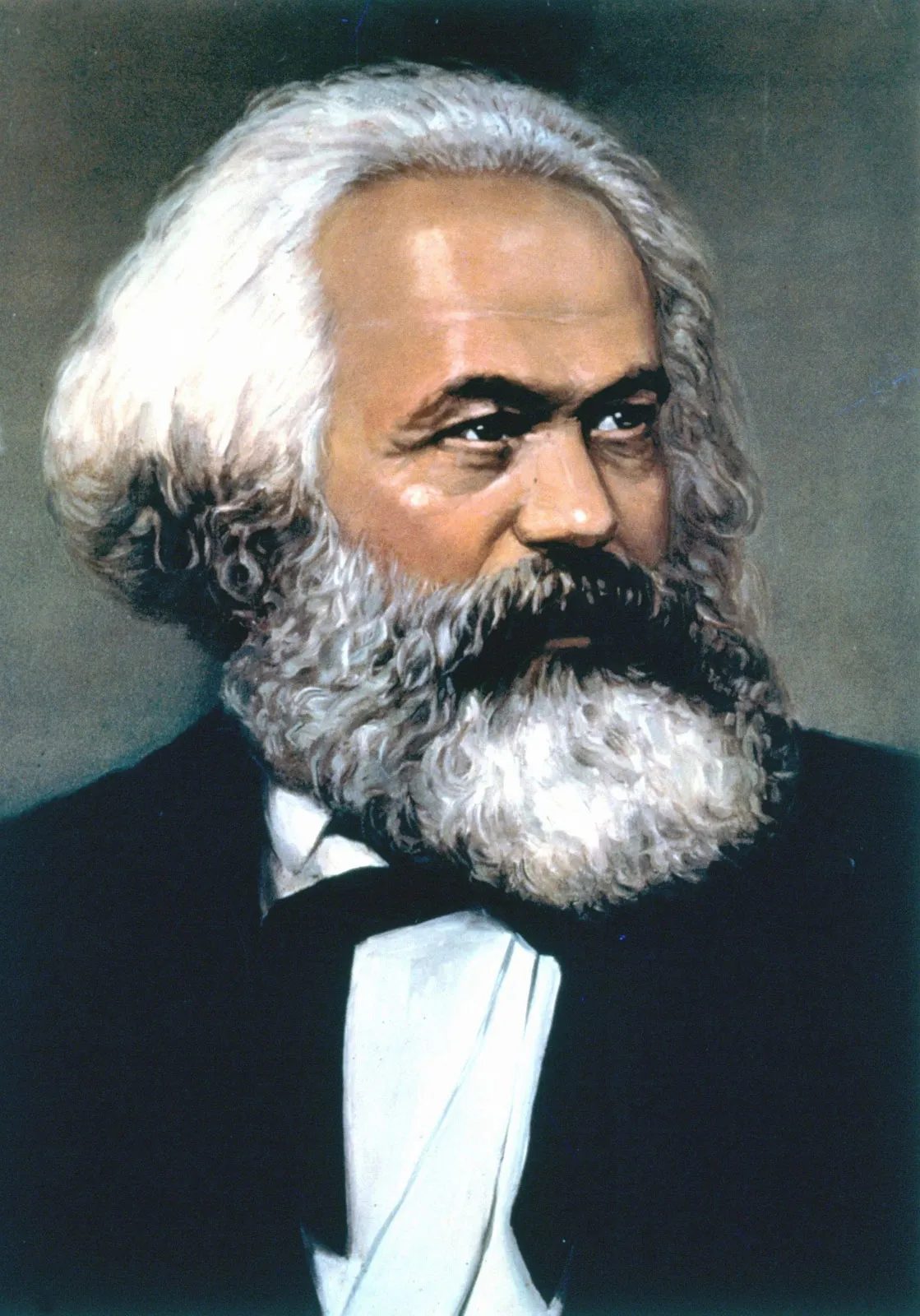

German philosophy provided the mold for Marx’s early thinking. You can see it clearly in his education. He studied at the University of Berlin when G.W.F. Hegel was the dominant voice in German intellectual circles. Hegel’s idealism claimed that history was the unfolding of “spirit.” It wasn’t a smooth ride. It required struggle. Agony. The overcoming of obstacles to reach self-knowledge.
Think of individuals. You can’t realize your potential for freedom if you stay in a childish, adolescent state. Spirit works the same way. It develops dialectically. Opposing ideas clash. Interests collide. The result is greater self-awareness. Slavery is a good example. It was once seen as natural. Acceptable. Then the slaves struggled to be recognized as persons. Master and slave recognized their common humanity. The false sense of the master’s superiority collapsed. Spirit moved forward.
From Idealism to Materialism
Marx kept the engine of history moving but changed the fuel. Hegel saw history as spirit’s self-realization through conflict. Marx saw it differently. For him, history was a story of class struggle over material resources. Economic interests drove the bus.
He replaced Hegel’s philosophical idealism with a materialist theory of history. The logic is brutal but simple. Before humans can do anything else, they must produce what they need to survive. They are subject to necessity. Freedom, in Marx’s view, is the act of overcoming this necessity.
Necessity forces people to labor. Only those free from this compulsion can develop their talents. That’s the trade-off. Throughout history, freedom was restricted to the ruling class. They controlled the land. The means of production. They exploited the labor of the poor.
Masters in slave societies. Aristocracy in feudal times. Bourgeoisie in capitalist societies. They all enjoyed degrees of freedom. But they bought it with the subservience of slaves, serfs, and industrial workers. The proletariat provided the necessary labor. The cost was their own constraint.
Capitalism’s Double Edge
Capitalism is a progressive force. It transformed the industrial world. It unleashed productive power. This power has the potential to free everyone from necessity. Yet it is also exploitative. It alienates both capitalists and workers from their true humanity.
The system condemns the proletariat. They own nothing but their labor power. They live lives of grinding labor. Meanwhile, capitalists reap the profits. It is a volatile situation. Marx believed the inevitable result was war. A war that would end all class divisions.
Depressions. Recessions. Competition for jobs. These pressures force workers to realize they form a class. The proletariat is oppressed by the bourgeoisie. Armed with this awareness, they will overthrow their class enemy. The uprising will be spontaneous. Workers will seize control of factories. Mines. Railroads. Other means of production. Eventually, they take the government. They convert it into a revolutionary dictatorship of the proletariat.
The Withering State
Under socialism or communism, Marx and Engels did not draw a clear line between the two terms. The state itself would wither away. People would gradually shed the selfish attitudes instilled by private ownership of the means of production. Freed from necessity and exploitation, people would live in a true community. A place that gives each individual the means to cultivate their gifts in all directions.
The revolution wasn’t a random event. It was ordained by the logic of capitalism itself. Capitalists competed for profits. In doing so, they created their own “grave diggers” in the proletariat.
The role of the revolutionary like Marx was confined to that of a midwife. They could not create the revolution. They could only speed it along. Ease its birth pangs.
Qualifying the Doctrine
This was the official doctrine. The writings and political activities added nuance. Marx acknowledged that socialism might replace capitalism peacefully. England. The United States. Countries where the proletariat was gaining the franchise. He also suggested a semifeudal country like Russia might become socialist without first passing through capitalist industrialism.
He played an important part in the International Working Men’s Association. The First International was formed in 1864. It was a group of labor leaders. Not exclusively revolutionary. Not entirely committed to socialism.
Marx was not the inflexible economic determinist some critics claim. He understood political mechanics. Nuance. But he remained convinced that history was on the side of socialism. The equal development of all people under socialism was the fulfillment of history.
Or so he believed. The machinery of history keeps turning. Whether the gears align for equality or exploitation remains the question we are still asking.
By 1883, the label “Marxist” was already sticking. It wasn’t just a descriptor; it was a brand. The Social Democratic Party of Germany (SPD) had become the primary vessel for this ideology. They had formed in 1875, merging two distinct groups: a hardline Marxist faction and the party founded by Ferdinand Lassalle.
Lassalle was a rival to Marx. A German thinker, he took a different path. Marx later tore into him in Critique of the Gotha Programme. He wrote that Lassalle viewed the workers’ movement through a “narrowest national standpoint.” Lassalle wanted to convert Germany. He wanted to win elections. He believed in using state aid to set up producers’ cooperatives.
Marx scoffed at this. He thought socialism had to be international. He believed in revolutionary transformation. The SPD ultimately sided with Marx. But the feud with Lassalle and his followers showed that socialist thought in the late 19th century was far from monolithic. There were other currents. Strong ones.
When Faith Met Finance
Capitalism drew condemnation from across the ideological spectrum. But the reasons varied wildly. Some socialists were militant atheists. Others saw a direct line to the divine.
Saint-Simon, an early rationalist, didn’t just want economic change. He called for a “new Christianity.” He wanted to merge Christian social teachings with modern science and industry. The goal? A society that satisfied basic human needs. His followers tried to build this. They created a sect known as “the religion of the engineers.” It combined universal brotherhood with faith in enlightened management.
This same energy fueled Edward Bellamy’s Looking Backward (1888). It was an American utopian novel. It became a bestseller. Across the channel in England, Anglican clergymen like Frederick Denison Maurice and Charles Kingsley started a Christian socialist movement in the late 1840s. Their argument was simple. The competitive individualism of laissez-faire capitalism clashed with the spirit of Christianity.
Leo Tolstoy felt the same pull. The Russian novelist, anarchist, and pacifist found common ground with these thinkers.
Religion never dominated socialist theory. But the link persisted. It survived well into the 20th century.
In the 1960s, liberation theology emerged among Roman Catholic theologians in Latin America. Critics called it an attempt to marry Marx and Jesus. In Britain, the Christian Socialist Movement affiliated with the Labour Party. It wasn’t just theory. It had political teeth. Prime Minister Gordon Brown belonged to the movement. His father was a Methodist minister. Tony Blair, an Anglican who later converted to Catholicism, also had ties.
The Anarchist Counter-Punch
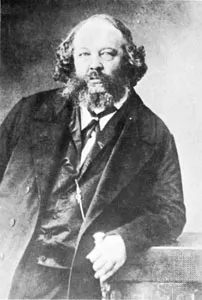
Tolstoy’s pacifism and religion did not win over Mikhail Bakunin. The Russian anarchist was flamboyant. He was also violent.
Bakunin saw religion, capitalism, and the state as chains. They had to be smashed. Only then could people be free. He wrote in an early essay, “The Reaction in Germany” (1842): “The passion for destruction is also a creative passion.”
This belief drove him. He jumped from one uprising to another. He plotted conspiracy after conspiracy. It also brought him into conflict with Marx. That fight helped destroy the International Working Men’s Association in the 1870s.
Where did they agree? They both wanted a classless, stateless community. They both wanted the means of production under community control.
But they disagreed on the path. Marx insisted on the “dictatorship of the proletariat” as a necessary step. Bakunin rejected this. He argued that a workers’ dictatorship would become more oppressive than the bourgeois state. At least the bourgeois state had an organized working class to check its power.
Bakunin saw no such check in a proletarian state. He saw only a new master.

Kropotkin’s Science of Cooperation
Peter Kropotkin and Emma Goldman softened the edges of anarcho-communism, but they didn’t remove the teeth. Kropotkin, one of the Russian émigrés who shaped the movement, didn’t rely on pure idealism. He leaned on data. In his 1897 book Mutual Aid, he used Charles Darwin’s evolution theory to prove a counter-intuitive point. The prevailing social Darwinism of the era claimed that competition was the sole driver of success. Kropotkin argued the opposite. The groups that actually survived and thrived were the ones that cooperated.
Emma Goldman, known in the US as “Red Emma,” took a different tack. Her focus was on personal and institutional oppression. She attacked the pillars of early 20th-century society: religion, capitalism, the state, and marriage. In her 1910 essay “Marriage and Love,” she labeled marriage an institution that turned women into absolute dependents. She called them parasites. Goldman’s activism wasn’t just theoretical. She went to prison for advocating birth control. Her work highlighted how economic structures trapped individuals, particularly women, in subservience.
The Fabian Strategy of Gradualism
While anarcho-communists demanded the total abolition of the state, a different branch of socialism emerged in Britain. It was milder. It was centralist. It was Fabian socialism. The name came from the Roman general Fabius Cunctator. The Fabian Society members admired his tactics. He avoided pitched battles. He wore down Hannibal’s forces through delay and attrition.
The Fabians applied this logic to politics. They favored gradualism over revolution. Their version of socialism involved social control of property, but administered by an impartial, enlightened state. Think of it as a government run by experts. The members were mostly middle-class intellectuals. George Bernard Shaw. Sidney and Beatrice Webb. Beatrice Webb’s husband. Graham Wallas. H.G. Wells. They believed persuasion and education would win the day. Violent class warfare was a dead end.
They didn’t form their own political party initially. They didn’t work through trade unions. Instead, they infiltrated existing parties. They aimed for influence within the Labour Party. They gained considerable sway there. They had little to do with the party’s formation in the early 1900s, but they shaped its later direction.
Syndicalism and the Myth of the General Strike
Syndicalism sat near anarcho-communism on the decentralist spectrum. It drew inspiration from Proudhon. It grew out of the French trade-union movement at the end of the 19th century. Syndicat is the French word for trade union. It became a major force in Italy and Spain in the early 20th century. Fascist regimes crushed it there. In the United States, it appeared as the Industrial Workers of the World. People called them “Wobblies.” They founded the group in 1905.
The core tenets were workers’ control and direct action. Syndicalists like Fernand Pelloutier distrusted the state. They saw it as a capitalist agent. They also distrusted political parties. They believed those parties were incapable of radical change. Their goal was to replace both capitalism and the state with a loose federation of local worker groups.
How would they get there? Through direct action. Specifically, the general strike. A massive work stoppage that would halt the economy and bring down the government. Georges Sorel expanded on this in his 1908 book Reflections on Violence. He didn’t see the general strike as an inevitable historical result. He called it a “myth.” A myth that could inspire people to overthrow capitalism if enough of them acted on it.
Guild Socialism: A Middle Ground
Guild socialism sat between syndicalism and Fabianism. It was English. It attracted a modest following in the first two decades of the 20th century. The movement looked back to the medieval guild. These were associations of craftsmen who set their own working conditions.
Theorists like Samuel G. Hobson and G.D.H. Cole advocated for public ownership of industries. But they organized those industries into guilds. Each guild would be democratically controlled by its trade union. The role of the state was ambiguous. Some guild socialists wanted the state to coordinate the guilds. Others wanted its role limited to protection or policing.
The main difference from the Fabians? Less state power. Guild socialists were reluctant to invest too much authority in the government. They preferred the autonomy of the guilds. It was a reformist tactic, but one that kept the state at arm’s length.
The Great Schism in Socialism
The year was 1889. The world was celebrating the centenary of the French Revolution. In Paris, two rival socialist conventions merged to form the Second International. It was supposed to be a revival of the old International Working Men’s Association. It was supposed to be a unity project.
It wasn’t.
The new group was dominated by Marxists. Specifically, it was dominated by the Social Democratic Party of Germany (SPD). This wasn’t just theoretical influence. The SPD had become a legitimate political force. Otto von Bismarck had tried to crush it. He tried everything. Arrests. Bans. Harassment.
It didn’t work.
Wilhelm Liebknecht and August Bebel turned the SPD into a mass party. They won votes. In the 1890 parliamentary elections, they secured nearly one-fifth of the total cast. That is significant. That is power.
But victory created a crisis. If you can win elections, do you need revolution?
This is the core of revisionism vs revolution.
Karl Kautsky’s Tightrope
The party’s chief theorist, Karl Kautsky, tried to have it both ways. This is often called the “orthodox” position. Kautsky argued that the SPD could participate in parliamentary politics while still adhering to Marx’s revolutionary doctrine.
He tried to reconcile the ballot box with the barricade.
It was a fragile argument. The success of electoral politics raised a dangerous question. Did circumstances change? Did the proletariat really need to overthrow capitalism violently?
Some leaders thought yes. They thought Marx was outdated.
Eduard Bernstein’s Betrayal
Enter Eduard Bernstein.
He was an SPD leader. He fled to England to escape Bismarck’s persecution. While there, he rubbed shoulders with Friedrich Engels. He also met the Fabians. They were British socialists who believed in gradual change. They didn’t want to burn the system down. They wanted to tweak it.
Bernstein watched the reality on the ground. He looked at the workers.
Marx had predicted that the proletariat’s condition would become increasingly desperate. It was a law of historical materialism. The poor would get poorer until they broke the chain.
Bernstein saw the opposite.
Living conditions were improving. Working conditions were stabilizing. Why? Trade unions were gaining strength. The franchise was expanding. Workers were getting a voice.
So Bernstein argued that the revolutionary overthrow of capitalism was neither necessary nor desirable. It was too dangerous. It led to vague, potentially tyrannical dictatorships.
He published Evolutionary Socialism in 1899. The thesis was simple. Peaceful transformation is safer. It is more realistic.
The War of Words
The reaction was immediate. Hostile. Violent.
Kautsky and other orthodox Marxists attacked him. It was a polemical war. Years of it.
Eventually, the revisionists won inside the SPD. The party abandoned its revolutionary pretenses. They stopped talking about overthrowing the state. They started talking about managing it.
Not everyone agreed.
Rosa Luxemburg remained a stalwart of revolutionary Marxism. She didn’t buy the gradualist narrative. She stayed faithful to the old spirit.
Lenin’s Dilemma
While Germany debated theory, Russia was struggling with reality.
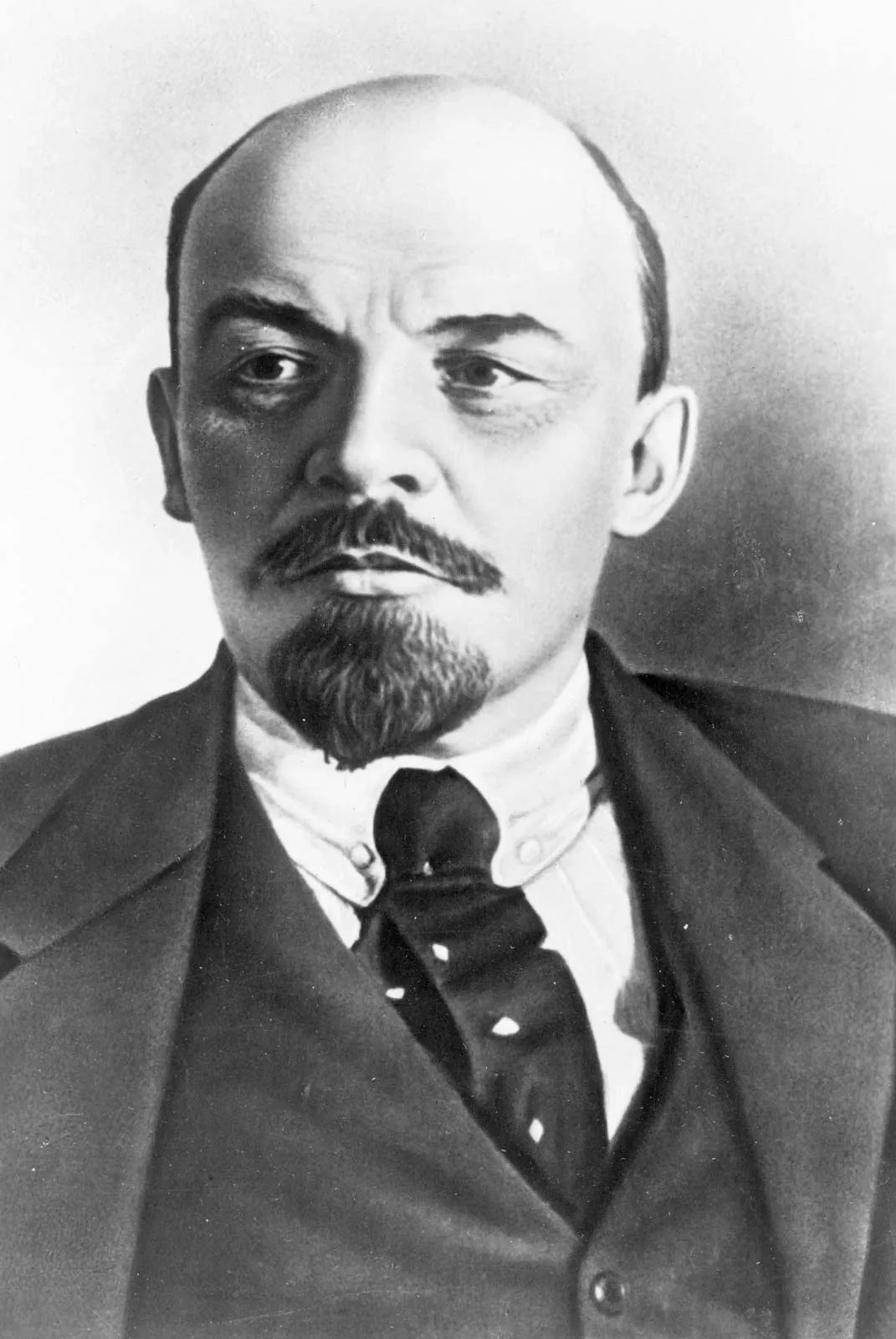
V.I. Ulyanov. Known as Lenin.
He led the Bolshevik, or “majority,” faction of the Russian Social-Democratic Workers’ Party. He had already been accused of straying from the Marxist path.
Why?
Look at Russia in the late 19th century. It was semifeudal. Barely any industrial capitalism.
Marx had left a loophole. He suggested a country like Russia might move directly from feudalism to socialism. Skip the middleman.
But the standard Marxist position was rigid. Capitalism was a necessary stage. You needed it. Without capitalism, you didn’t have the productive power to overcome necessity. You didn’t have a revolutionary proletariat.
How do you build socialism without the industrial base Marx said was essential?
Lenis looked at that gap. He knew the orthodox answer wasn’t working.

Lenin vs. The Reformists
The standard Marxist view in Russia was evolutionary. Lenin rejected it. He didn’t trust the working class to spark a revolution on their own. In What Is to Be Done? (1902), he argued that workers left alone would settle for minor wins. Better wages. Safer conditions. That was it. No systemic change.
So they needed leadership. A vanguard party of professional revolutionaries would have to educate and guide them. The Russian state was too authoritarian for open organizing. The party had to be conspiratorial. Disciplined. Elitist.
His rivals within the Marxist movement disagreed. They thought he was building an authoritarian structure. Lenin’s manipulation of a party congress vote settled the name, if not the argument. He called them the Mensheviks. The “minority.” He became the Bolsheviks. The majority.
This split wasn’t just personal. It was ideological.
The Logic of Imperialism
Lenin’s commitment to immediate revolution put him at odds with revisionists. These were Marxists who believed in gradual change through democratic means. Lenin saw this as a betrayal of theory.
In Imperialism, the Highest Stage of Capitalism (1916), he explained why the European working class wasn’t revolting. He argued it was a bribe. Capitalists in Europe and the United States were using “superprofits” to buy peace. Where did those profits come from? Exploitation of the Global South. Labor and resources in poorer regions.
The workers in the core countries enjoyed higher living standards because they were indirectly benefiting from colonial extraction.
But this dynamic contained the seed of its own destruction. Imperialism would expose the contradictions of capitalism everywhere. Not just in the industrial centers. But in the colonized territories as well.
This opened a new door. Revolution didn’t have to start in the most advanced capitalist countries. It could happen in the periphery. In countries that hadn’t fully developed capitalism.
Lenis logic was simple. The chain breaks at its weakest link.

World War I didn’t just redraw maps. It shattered the Second International.
Before August 1914, the consensus among European socialists was rigid. The only war worth fighting was class war against the bourgeoisie. International solidarity was the rule. Then the guns fired.
Most chose their national flag over internationalism. The Social Democratic Party of Germany (SPD) voted for war credits in the Reichstag. It was a decisive break. Socialists in other nations followed suit, aligning with their governments. The Second International drifted into irrelevance.
Exceptions existed. Rosa Luxemburg and Vladimir Lenin stood apart. They saw the war as imperialist loot, not patriotic duty. But they were in the minority.
In Russia, the war’s devastation broke the tsarist regime. This created a vacuum. The Bolsheviks moved fast. The Russian Revolution of 1917 gave Lenin immense standing among revolutionary Marxists. It also sparked a new debate.
Luxemburg and others watched closely. They saw the “dictatorship of the proletariat” shifting into a dictatorship of the All-Russian Communist Party. The party took control. This shift troubled many, yet the victory offered hope. If Russia could succeed, perhaps other nations would follow.
Lenin had a different fear. Survival required help. Specifically, help from socialist neighbors. He needed allies.
The Comintern and the Birth of Two Socialisms
Moscow hosted a meeting to establish a Third International. They called it the Communist International, or Comintern.
The response was lukewarm. By the time delegates gathered in March 1919, the outlook was grim. The Spartacus Revolt in Germany had failed. It ended in the execution of Luxemburg and Karl Liebknecht by counterrevolutionary forces.
Despite the loss, Lenin pushed forward. The Comintern formed. But it quickly became clear what it truly was.
The Comintern was an agent of the Soviet Union, not of international socialism.
A fissure opened between two camps. Communists on one side. Socialists, or social democrats, on the other.
The split became institutional. Communist parties emerged across Europe. They challenged existing socialist parties and capitalism itself.
The ideologies diverged sharply.
Communists adhered to Marxism-Leninism. They were revolutionary Marxists. They believed in overturning the system.
Socialists were more diverse. They included revisionists and non-Marxists. But they shared a commitment to peaceful, democratic tactics. They rejected the inevitability of capitalism’s collapse. Instead, they appealed to ethical considerations.
In England, Richard Henry Tawney found an audience in the Labour Party. He argued for socialism based on fellowship. He emphasized the dignity of work. He focused on the equal worth of all society members. This was not a call for violent revolution. It was a call for moral reform.
Stalin’s Shadow and Cultural Resistance
On the communist side, the standard was set by Joseph Stalin.
Lenin died in 1924. A power struggle ensued. Stalin defeated Leon Trotsky. He also ordered the deaths of Trotsky and other rivals. Millions more died under his forced collectivization and industrialization programs.
Stalin’s focus shifted. He concentrated on “socialism in one country.” He ignored the global revolution Lenin had envisioned.
Occasional deviations occurred. Antonio Gramsci, a founder of the Italian Communist Party, resisted the reduction of Marx to pure economic terms. He focused on cultural hegemony. He argued that ruling classes maintained control through schools, churches, and media. This encouraged worker acquiescence.
Gramsci tried to convince other communists of the revolutionary potential in cultural transformation. He failed. He was imprisoned by Mussolini’s fascist regime from 1926 until his death in 1937.
Fascism was a common enemy. It crushed both communists and socialists.
In Italy, Spain under Franco, and Germany under Hitler, suppression was swift. Socialist parties had gained ground in the 1920s and ’30s. In Germany, Britain, and France, they participated in coalition governments. In Sweden, the Social Democratic Workers’ Party won in 1932. They promised a “people’s home.” Their platform rested on equality, concern, cooperation, and helpfulness.
But wherever fascists took power, socialists and communists were targeted first.
The Limits of Global Socialism
Victories remained scarce outside Europe between the wars.
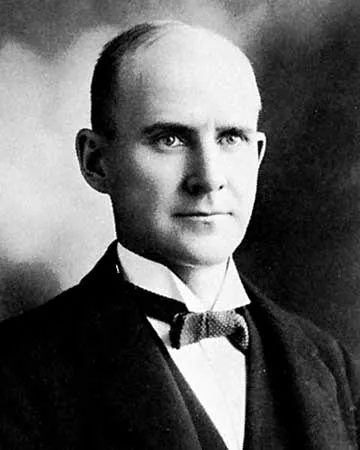
In the United States, Eugene V. Debs ran for president in 1920. He won nearly one million votes. This was less than four percent of the total cast. It remains the high point for American socialists in presidential elections.
In India, Mahatma Gandhi built a massive following. But his appeal stemmed from the campaign for independence from Britain. Traces of socialism existed in his philosophy. But his popularity was not driven by socialist ideology.
The dream of a unified global socialist movement had fractured. The war had forced a choice. Most chose the nation. A few chose revolution. And the world split into two distinct political realities.

Mao Zedong built the Chinese Communist Party (CCP) on a foundation that looked nothing like traditional Marxist theory. He started in 1921, but the early years were a disaster. The Comintern pushed the fledgling communists into an alliance with Chiang Kai-shek’s nationalist forces. Chiang turned on them the moment it suited him.
Mao had no choice but to retreat. He moved his forces into the fields and hills to rebuild.
This wasn’t just a tactical retreat. It was an ideological shift. Mao kept Lenin’s idea of the vanguard party but changed the source of revolutionary energy. Instead of the urban industrial worker, he looked to the peasantry. He called them a “rural proletariat.” It was a clever rebranding.
In Mao’s hands, the concept of nation largely replaced that of class.
China was framed as a poor, oppressed nation. The enemy wasn’t just local landlords. It was the entire structure of imperialist nations and their bourgeois collaborators. This nationalism-driven communism allowed the CCP to mobilize a massive base outside the cities.
The fracture of postwar socialism
World War II forced temporary marriages of convenience. Communists, socialists, liberals, and conservatives all stood against fascism. The alliance held only as long as the bombs were falling.
Once the war ended, the glue melted. The Soviet Union installed communist regimes across Eastern Europe. This wasn’t liberation to many Western socialists. It looked like expansion.
The Cold War turned this political disagreement into an ideological chasm.
Western socialists began defining themselves by what they were not. They were democrats. They opposed the one-party rule of the Soviet Union and its satellites. The split was clean and brutal.
Take the British Labour Party as the prime example. They won a landslide majority in the 1945 election. They built the National Health Service. They took major industries and utilities under public control. They were socialists, but they weren’t communists.
When they lost the 1951 election, they didn’t start a revolution. They didn’t claim the vote was stolen. They peacefully handed power to the Conservatives.
That peaceful transfer of power defined the democratic socialist path. It stood in stark contrast to the Soviet model. The fissure between these two branches of the left was now permanent.
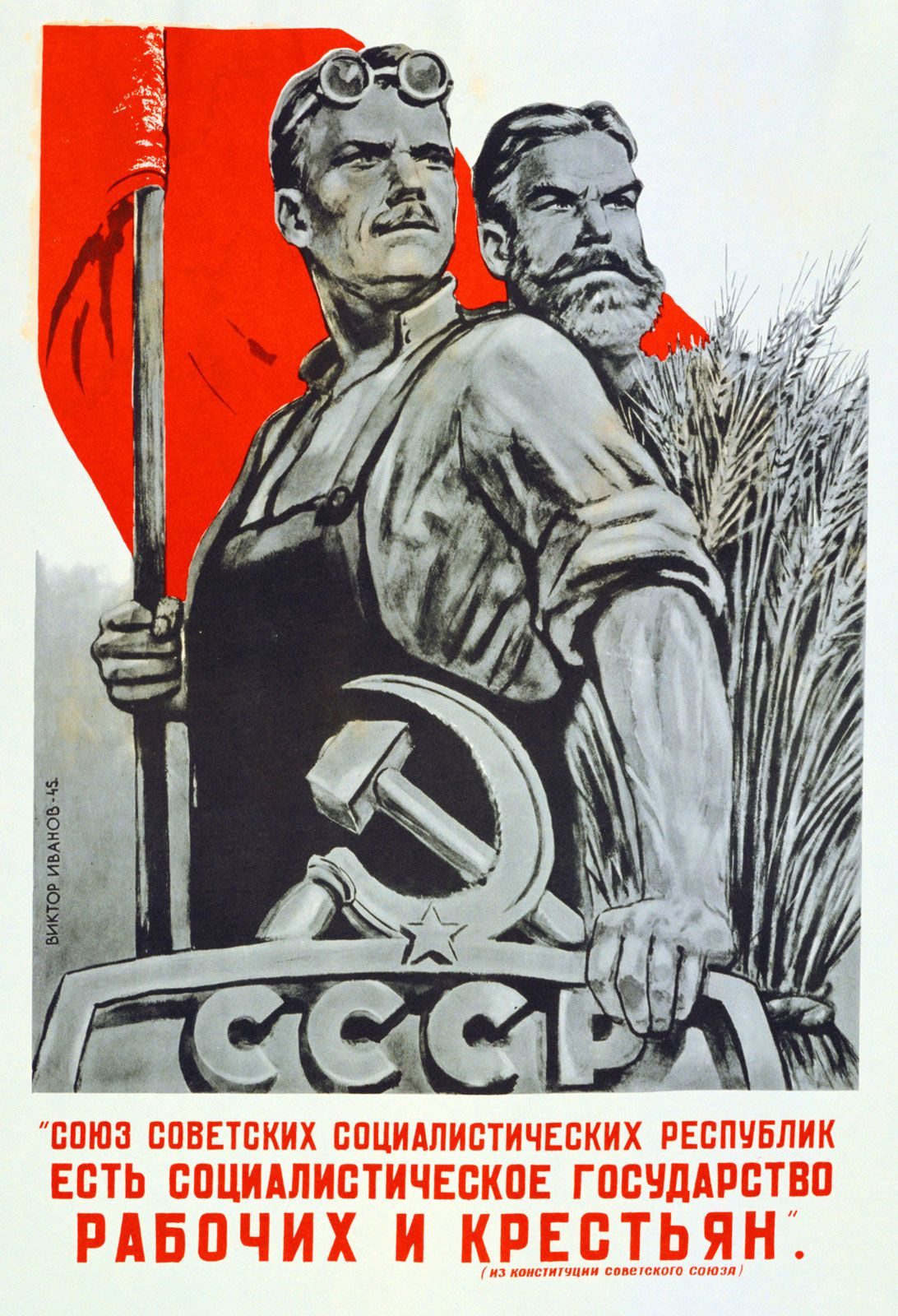

The Communist claim to democracy was a semantic trick. They argued for “people’s democracy,” but the definition relied on a simple premise: the masses weren’t ready to rule themselves. Once Mao Zedong drove Chiang Kai-shek’s forces off the mainland in 1949, the new People’s Republic of China became a “people’s democratic dictatorship.” It was a one-party state that claimed to act in the people’s interest by crushing enemies and building socialism.
Freedom of expression? Political competition? Those were labeled bourgeois and counterrevolutionary. This logic didn’t just stop in Beijing. It became the blueprint for one-party rule in North Korea, Vietnam, Cuba, and elsewhere. The idea was that the vanguard party knew best, and the people had to wait.
The European Compromise: Social Market Economies
Europe went a different route. Socialists there didn’t try to overthrow the system; they modified it. And they won elections doing it.
The Scandinavians led the charge. They created “mixed economies” — a term that sounds bureaucratic but describes a very real political compromise. Private ownership remained largely intact. The state directed the economy and built substantial welfare programs. It wasn’t the end of capitalism. It was a cage for it.
Other parties followed. Look at Germany’s Social Democratic Party (SPD). In 1959, they adopted the Bad Godesberg program. They dropped the Marxist pretenses entirely. The new commitment? A “social market economy.” Their mantra was simple: as much competition as possible, as much planning as necessary.
Some observers celebrated this blurring of lines. They called it “the end of ideology.” The battle between pure socialism and pure liberalism was over. A compromise had been reached.
Others saw it differently. The radical student left of the 1960s wasn’t impressed. They argued there was no real choice left. You had capitalism. You had the “obsolete communism” of the Soviet bloc. And you had the bureaucratic socialism of Western Europe. Three boxes. None of them exciting.
African and Arab Socialism: Modernization Through Tradition
While Europe settled into a middle ground, the collapse of European colonialism in Africa and the Middle East created space for new ideologies. The old colonial powers were viewed as capitalist imperialists. So, new leaders reached for socialism, but they tailored it to local contexts.
“African socialism” and “Arab socialism” became common terms in the 1950s and ’60s. These weren’t just slogans. They were policy frameworks that combined Marxist-Leninist one-party rule with appeals to indigenous traditions. Communal land ownership was frequently invoked. The goal was rapid modernization.
Tanzania offers a clear case study. Julius Nyerere developed ujamaa, Swahili for “familyhood.” The program was egalitarian. It collectivized village farmlands. It aimed for economic self-sufficiency. It failed. The attempt to achieve self-reliance under a one-party state collapsed under the weight of its own ambition. But the attempt itself mattered. It showed how socialism could be adapted to non-European contexts.
Asia’s Exception: Japan’s Enduring Socialist Party
Asia’s experience differed sharply from Africa’s. No distinctive, homegrown form of socialism emerged across the continent. Aside from the communist regimes already established in China and elsewhere, Japan stood alone.
It was the only Asian country where a socialist party built a sizable, enduring following. They didn’t just protest. They governed. At times, they controlled the government outright. At others, they participated in governing coalitions.
This wasn’t a revolutionary wave. It was a political institutionalization. Socialism in Japan worked within the existing parliamentary structure. It didn’t seek to smash the state. It sought to run it.
Why did this work in Japan but not elsewhere? The answer lies in the post-war order. Japan was occupied, rebuilt, and integrated into the Western economic sphere. The socialist party there had to adapt or die. They chose adaptation. They accepted the market. They focused on labor rights and social welfare. They became a mainstream political force rather than a revolutionary threat.
The rest of Asia saw socialism either as a tool for anti-colonial resistance or as a rigid, imported ideology. Japan saw it as a partner in governance. The results were vastly different.
The Legacy of Fragmentation
By the late

Latin America’s Unique Socialist Experiments
Let’s be clear: Latin America hasn’t exactly contributed a new flavor to socialist theory. It’s a flat fact. You look at the region’s history and you don’t see a cohesive ideological export.
Fidel Castro’s Cuba walked the Marxist-Leninist line in the 1950s and 60s. Then it slowed down. The collapse of the Soviet Union in 1991 forced a moderation that stuck. Then there’s liberation theology. It told Christians to prioritize the poor. But it stopped short of building an explicit socialist program. It was moral, not political machinery.
Hugo Chávez tried. His “Bolivarian Revolution” in Venezuela was the closest thing to a distinct Latin American expression of socialist impulses. But calling it distinct is generous. Apart from borrowing Simón Bolívar’s name as a liberator, Chávez didn’t actually connect socialism to Bolívar’s actual thoughts or deeds. It was branding, not philosophy.
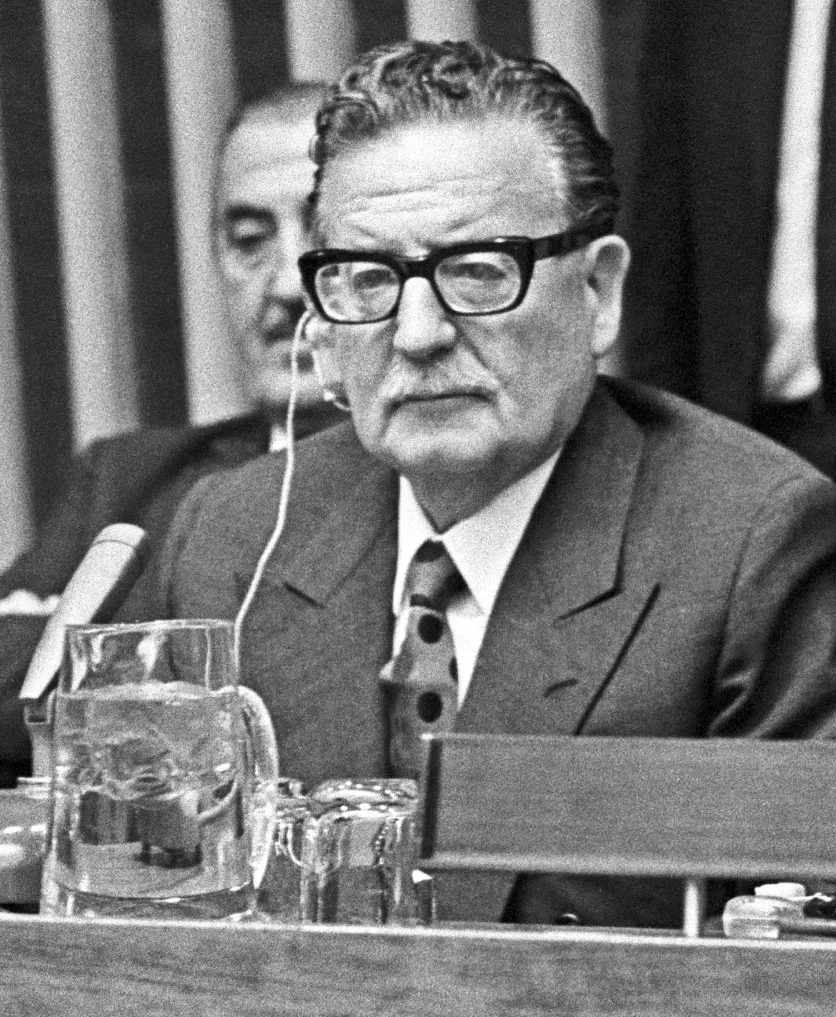
Salvador Allende offers a better template. His attempt to unite Marxists and reformers in Chile is arguably the most representative model for Latin American socialism in the late 20th century. He wasn’t trying to copy Moscow. He was trying to work within a democratic framework.
He won by a plurality in a three-way race in 1970. That’s a fragile victory to start with. Allende moved fast. He nationalized foreign copper corporations. He redistributed land. He pushed wealth toward the poor. The backlash was immediate and fierce. Domestic opposition mixed with foreign interference. Economic turmoil followed. The result was a military coup. Allende died during it. The exact mechanics of his death remain murky—suicide or assassination is still debated. But the outcome was the end of his project.
The Post-Allende Wave
Allende’s fate didn’t kill the idea. It just changed its shape.
Several leaders followed his playbook. They didn’t use tanks. They used ballots. Hugo Chávez led the charge in 1999. He was followed by a wave of self-proclaimed socialists or left-of-center winners in Brazil, Chile, Argentina, Uruguay, and Bolivia in the early 2000s.
Did they share a unified program? No. That would be too tidy. But their policy overlap was thick.
- Increased welfare provision for the poor.
- Nationalization of select foreign corporations.
- Land redistribution from large estates to peasants.
- Open resistance to the neoliberal policies of the World Bank and the International Monetary Fund.
They were less interested in theoretical purity and more interested in correcting imbalances. The target was always the same: entrenched inequality.
The Death of the Command Economy
The broader context for all this was the collapse of communism. It’s the defining event of the era. First eastern Europe in 1989. Then the Soviet Union in 1991.
Communist parties survived. North Korea, Vietnam, Cuba, and China kept their flags flying. But the ideology hollowed out. By the late 20th century, the Chinese Communist Party (CCP) had shed most of its Marxism. Economic reforms favored private ownership. Market competition was encouraged. What stayed was the Leninist insistence on one-party rule. The economic engine changed. The political control remained.
Mikhail Gorbachev tried to navigate this minefield. He became general secretary in 1985. He introduced glasnost (“openness”) and perestroika (“restructuring”). His goal wasn’t to build a capitalist paradise. He wanted to fix the inefficient command economy. He wanted to raise living standards without fully embracing markets.
Glasnost was the mistake. Or rather, the unintended consequence. Openness created political space for critics of communism. The downfall of eastern European regimes showed the way. It didn’t end quietly. It ended with a failed coup by hard-line communists in 1991.
The coup failed so quickly and spectacularly that the Soviet Union just… disintegrated.
Communism wasn’t dead. But it was dying. And as that old model collapsed, the new Latin American variants had plenty of room to grow. They didn’t inherit the Soviet playbook. They inherited the vacuum.
The question now isn’t about theory. It’s about survival. The leaders who rose on the backs of Allende and Chávez faced a world where the alternative to neoliberalism wasn’t a state command economy. It was something messier. Something democratic. Something that still had to answer to the market.

The Third Way and the Rise of Market Socialism
The late 20th century brought a shift that shook the foundations of traditional political theory. We moved into what scholars called a postindustrial economy. In this new landscape, knowledge and information mattered far more than manual labor or raw material production. For socialism, which was designed as a direct response to industrial capitalism, this change raised uncomfortable questions. If the old industrial model was fading, was the old socialist model still relevant?
Many thinkers concluded that it wasn’t. This realization sparked intense debate about a “third way.” The idea was simple on paper. It proposed a center-left position. It wanted to keep the socialist focus on equality and welfare. But it wanted to drop the heavy lifting of class-based politics and public ownership of the means of production.
Tony Blair’s Labour Party in Britain made this concrete in 1995. They abandoned their historic commitment to nationalizing basic industries. The gamble paid off. Two years later, Labour won a landslide victory. Blair served as prime minister for a decade. He wasn’t alone in this pivot.
Other leaders embraced similar ground. In the United States, Bill Clinton championed this centrist approach. In Germany, Chancellor Gerhard Schröder followed suit. Wim Kok, the Prime Minister of the Netherlands, also professed the third way. The message was consistent: adapt or become irrelevant.
Why Critics Pushed for Market Socialism
Not everyone was convinced. Critics on the left argued that the third way betrayed socialism. They claimed it reduced equality to a mere chance to compete. In an economy where the rich got richer and the poor fell further behind, was that really equality? They insisted this wasn’t socialist. It was just capitalism with a polite smile.
But here is the twist. Even these harshest critics rarely called for a return to centralist socialism. They didn’t want a return to Soviet-style command economies. Instead, they advocated for a decentralized form of market socialism.
Market socialism is an interesting beast. It blends free-market mechanics with social ownership. The proposal varies, but the core structure is distinct. Businesses still compete for profits, just like in capitalism. However, they are owned or governed by the people who work there.
Imagine a workplace where employees choose their supervisors. Where they control their own working conditions. Where they set the prices for their products. Where they decide how to share profits or absorb losses. This is workplace democracy. It extends political voting rights into the economic sphere. You get a say in the daily decisions that shape your livelihood.
A Modest Future for Socialism?
If socialism has a future, it likely looks like this. Market socialism doesn’t promise the utopia of early socialists. It doesn’t offer the “brave new world” that Marx and his followers envisioned as the final stage of history. It is modest. It is realistic.
Its goal is to promote cooperation and solidarity. It tries to replace competitive individualism with collective responsibility. It aims to reduce, if not eliminate, the class divisions that lead to exploitation and alienation. In these ways, it keeps the spirit of socialist inspiration alive.
This isn’t just theory. In Latin America and other regions, socialists still call for public ownership of natural resources and major industries. But they leave room for private competition. They aren’t trying to wipe out the free market. They want to bring it under control.
The shift is clear. Socialists now seem more interested in regulating the market than abolishing it. It’s a pragmatic pivot. One that acknowledges the power of information and capital in a postindustrial world.
Historical Context and Further Reading
To understand where we are, you need to look at where we’ve been. The intellectual history of socialism is vast.
- Bernard Crick, Socialism (1987) offers a brief, albeit uneven, but insightful overview.
- For something more thorough, look at R.N. Berki, Socialism (1975), or George Lichtheim, A Short History of Socialism (1970, reissued 1983).
- If you want to trace the roots, Alexander Gray, The Socialist Tradition: Moses to Lenin (1946, reissued 1968) is excellent for precursors to modern thought.
- G.D.H. Cole provides the standard academic work with A History of Socialist Thought (5 vol. in 7, 1953–60, reissued 2002), covering the late 18th to mid-20th century.
- Warren Lerner, A History of Socialism and Communism in Modern Times (2nd ed., 1993) carries the narrative through the collapse of the Soviet Union.
- For a quick entry into the 21st century, Michael Newman, Socialism: A Very Short Introduction (2005) is highly concise.
- Primary sources are collected well in Albert Fried and Ronald Sanders (eds.), Socialist Thought: A Documentary History (rev. ed., 1992).
The trail from utopian dreams to African realities is well-trodden by scholars. You start with the classics. Frank E. Manuel’s The Prophets of Paris (1962) and Keith Taylor’s The Political Ideas of the Utopian Socialists (1982) lay the groundwork. They define the early visions. Then you hit Karl Marx. Eugene Kamenka’s The Portable Karl Marx (1983) gathers the essential writings. It is a solid entry point.
For deeper analysis, look at Leszek Kołakowski. His Main Currents of Marxism (3 volumes, 1978) remains the gold standard for understanding Marxist varieties. Terence Ball and James Farr edited After Marx (1984) for sophisticated theoretical assessments. But what about the dissenters? Peter Gay wrote The Dilemma of Democratic Socialism (1952). It covers Eduard Bernstein’s revisionist challenge to orthodox Marx.
“The transformation of Marx’s theory into Soviet communism was not inevitable. It was a specific historical shift.”
You need context on the International itself. Julius Braunthal’s History of the International (3 vol., 1967–80) sets the benchmark. For the broader narrative, Edmund Wilson’s To the Finland Station (1940) and Bertram D. Wolfe’s Three Who Made a Revolution (1948) are still accessible and authoritative. They trace how theory became state power.
Anarchism and global socialist movements
George Woodcock’s Anarchism: A History of Libertarian Ideas and Movements (1962) mixes biography with survey data. It covers anarchist movements across multiple countries. It is not just theory. It is action.
Then there is the non-European context. African socialism has its own distinct lineage. William Friedland and Carl G. Rosberg Jr. edited African Socialism (1964). It collects scholarly analysis alongside classic statements by African leaders. Sami A. Hanna and George H. Gardner edited Arab Socialism: A Documentary Survey (1969). It is a useful primary source collection.
Where does Latin America fit in? Richard L. Harris wrote Marxism, Socialism, and Democracy in Latin America (1992). It discusses the region’s unique blend of ideology and political reality. The focus here is not just on ideology. It is on how these ideas functioned in different geopolitical environments.
Market socialism and the post-communist landscape
The fall of communism did not kill socialism. It reshaped it. Michael Harrington’s Socialism: Past and Future (1989) argues for its continuing relevance. The question became: how does it survive without authoritarianism?
Scholars like Robert A. Dahl and Carol C. Gould sought to link socialism to democracy. Dahl’s A Preface to Economic Democracy (1985) and Gould’s Rethinking Democracy (1988) are key texts. They advocate for market socialism. This is not pure central planning. It involves market mechanisms within a socialist framework.
David Miller’s Market, State, and Community (1989) follows this line. Alec Nove revisited The Economics of Feasible Socialism (2nd ed., 1991). John E. Roemer offered A Future for Socialism (1994). These authors explore economic feasibility. They ask what works in practice.
Is market socialism actually feasible? Christopher Pierson’s Socialism After Communism (1995) thinks not. He concludes that arguments against market socialism are stronger than those for it. The debate remains unresolved.
G.A. Cohen’s If You’re an Egalitarian, How Come You’re So Rich? (2000) adds a personal dimension. It blends autobiography with analysis of Marxist ethics. It questions the moral consistency of egalitarians. The work forces you to look at the trade-offs between principle and personal gain.
The field continues to evolve. The old binaries of plan versus market are insufficient. The newer works focus on cooperation, freedom, and economic structure. They do not offer easy answers. They offer frameworks for thinking about power and distribution in a post-communist world.