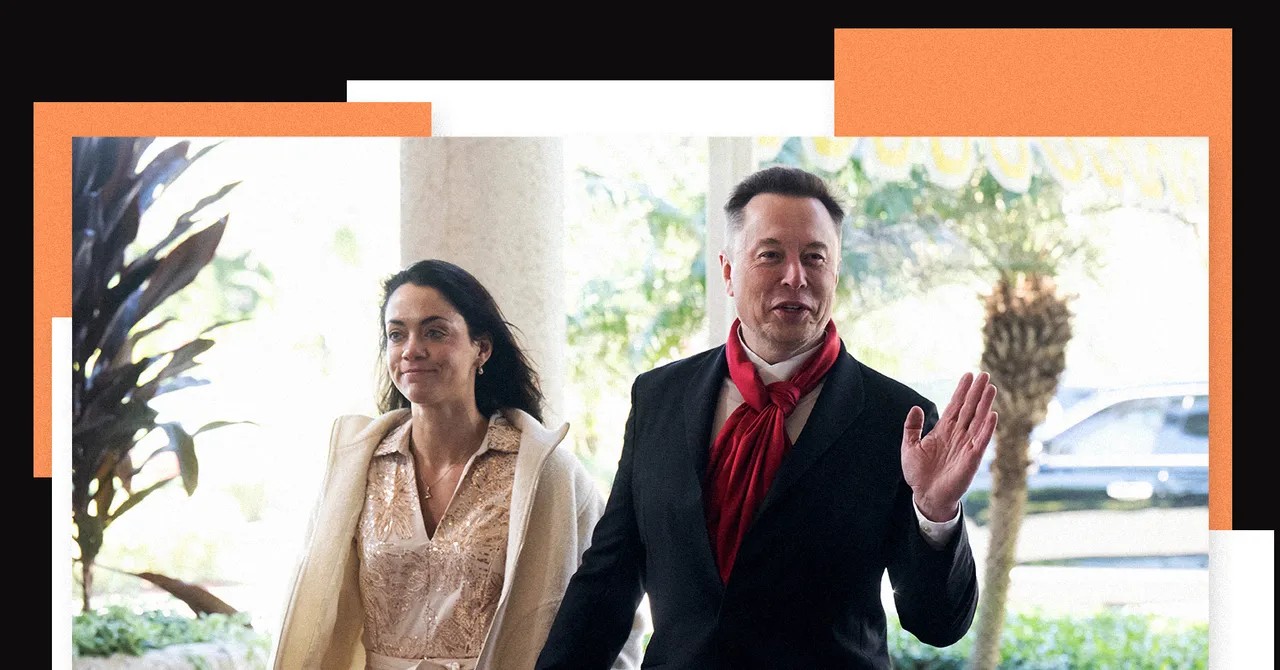
As the first week of the high-profile trial between Elon Musk and Sam Altman concludes, a pivotal figure has stepped out of the shadows: Shivon Zilis. While Musk is the public face of the dispute, court testimony reveals that Zilis served as a critical, behind-the-scenes liaison between Musk and OpenAI for years after he officially departed the organization’s board.
Her role offers a rare glimpse into the complex web of personal relationships, corporate maneuvering, and strategic information sharing that defined OpenAI’s early years.
The Dual Role: Partner and Proxy
Shivon Zilis is not a stranger to Musk’s inner circle. A former IBM employee and founding member of Bloomberg Beta, she joined OpenAI as an adviser in 2016. She later served on its nonprofit board from 2020 to 2023 and has held executive roles at Musk’s other ventures, including Neuralink and Tesla.
Personal and professional lines were blurred from the start. Musk has described Zilis variously in court as his “chief of staff,” a “close adviser,” and the mother of four of his children. However, Zilis has clarified in depositions that while they share a residence, Musk maintains his own home elsewhere. The couple’s romantic relationship reportedly began around 2016, coinciding with her informal advisory role at OpenAI.
Why this matters: The intersection of Musk’s personal life and his business interests creates a unique channel for influence. Zilis was not just an employee; she was a trusted confidante who could navigate both Musk’s ego and OpenAI’s boardroom dynamics.
Maintaining Influence After Departure
The core of OpenAI’s legal argument is that Zilis acted as a covert liaison for Musk even after he left the OpenAI board in February 2018. Text messages and emails presented in court suggest a deliberate strategy to keep Musk informed and involved.
- The “Close and Friendly” Directive: In February 2018, just before his departure was announced, Zilis texted Musk: “Do you prefer I stay close and friendly to OpenAI to keep info flowing or begin to disassociate? Trust game is about to get tricky…” Musk’s reply was explicit: “Close and friendly… we are going to actively try to move three or four people from OpenAI to Tesla.”
- Strategic Monitoring: Musk expressed skepticism about OpenAI’s potential if he focused solely on Tesla AI. Zilis reinforced this view, warning Musk about Demis Hassabis, the head of Google DeepMind. She argued that without someone to “slow Demis down,” the future of AI safety was at risk, positioning Musk as a necessary counterbalance.
- Ongoing Oversight: Even as she shifted her time to Neuralink and Tesla, Zilis continued to update Musk on OpenAI’s fundraising and project developments, asking if he wanted her to pull more hours back into “OpenAI oversight.”
“You don’t realize how much you have an ability to influence him directly or otherwise slow him down,” Zilis wrote to Musk regarding Google’s AI leadership. “I think you know I’m not a malicious person, but in this case it feels fundamentally irresponsible to not find a way to slow or alter his path.”
Mediator in Crisis
Zilis’s influence extended beyond Musk’s interests; she also advised OpenAI CEO Sam Altman on how to manage his volatile relationship with Musk.
- The Microsoft Funding Dispute: In October 2022, after Musk reacted angrily to news of OpenAI raising funds from Microsoft at a $20 billion valuation, Altman turned to Zilis for guidance. Her advice? “Don’t text back immediately.”
- Public Relations Strategy: Following Musk’s acquisition of Twitter, Altman asked Zilis if he should tweet something nice about Musk. He subsequently posted on X that society “underestimates how much it owes Elon for raising the collective ambition level.”
This dual-channel communication highlights a fragile ecosystem where personal intermediaries were essential for maintaining operational stability between two powerful, often adversarial, entities.
The Legal Stakes: Timing and Intent
The trial has exposed significant questions about Musk’s legal standing. While Musk argues that OpenAI “stole” his charity and betrayed its nonprofit mission, the timeline raises doubts.
- No Restrictive Conditions: Evidence shows Musk did not impose conditions on his $38 million donation that would prevent OpenAI from restructuring into a for-profit entity.
- Delayed Action: Musk waited years to file his lawsuit, despite expressing concerns about OpenAI’s direction long before 2023.
- The xAI Contradiction: Judge Yvonne Gonzalez Rogers highlighted the irony of Musk’s position. She noted that while Musk claims to be concerned about the risks of for-profit AI, he founded his own for-profit AI lab, xAI, in 2023. “It is also ironic that your client… is creating a company that is in the exact space,” she remarked.
Musk testified that his concerns only “boiled over” recently, but the court remains skeptical of the timing, especially given the emergence of his competing venture.
Conclusion
The trial has shifted focus from a simple dispute over corporate governance to a deeper examination of how informal networks and personal relationships drive decision-making in Silicon Valley. Shivon Zilis emerges not just as an insider, but as a key architect of the communication channels that kept Musk connected to OpenAI long after his official exit. As the trial proceeds, the jury must decide whether these actions constituted a breach of trust or merely the complex reality of navigating the world’s most ambitious tech projects.