
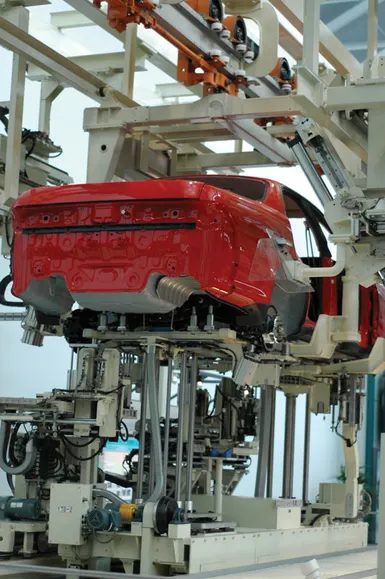
A car rolling off the assembly line is the result of a complex production system. It’s not just about welding metal; It is a structured method of converting raw materials into finished products or services. Production is fundamentally a process of change. It takes input and turns it into something useful.
The ingredients of this change are the same across industries. Economists call these inputs factors of production: land, labor and capital. Production managers often further divide these into the “five M’s”: men, machines, methods, materials and money. Whether you’re building a car or handling an insurance claim, you need these elements to function.
Flow of materials and information
The production system is defined by movement. There are two distinct types of flow to control. First is the physical flow. Raw materials go through intermediate stages (work in process) until they become finished goods. Second is information flow. Paperwork, information and digital documents are carried along with physical goods.
Both have hard limits. The physical capacity of the factory floor limits how much product can be manufactured. The data processing channel has its own bandwidth. If the data lags behind the physical goods, the system collapses. Managing this flow is the primary responsibility of production managers. They must plan and control the system to ensure that the results are as expected.
Capacity is the primary constraint, but quality acts as a secondary constraint. Quality is not a vague ideal. It is measured against objective standards. These include appearance, performance, durability and serviceability. This also includes timeliness of delivery, cost and accuracy of documentation. A system that produces goods too slowly or poorly specified is a failed system, regardless of quantity.
Batch system explained
Not all goods are created equally. There are three main types of production systems: batch, continuous and project production systems. The batch system is characterized by its flexibility.
In a batch production system, general-purpose equipment processes small production quantities. The specifications of each batch may vary significantly from the next. A certain amount of product goes through one or more stages as a single group. The entire volume is created simultaneously at the end of the cycle.
This approach differs from continuous systems where the production of identical products is continuous. Batch systems are ideal for variation. Some of the most common examples include specialized machine tools, heavy-duty construction equipment, specialty chemicals, and processed foods. The logic also extends to services. Claims processing in a large insurance company often follows a batch model. Because this focuses on specific jobs or orders, batch systems are often referred to as job shops.
“Batch production systems are often referred to as job shops.”
Why flexibility is important
The choice of system depends on the product. If you need thousands of identical widgets, a continuous line is efficient. But when the market calls for variety, batch production offers a solution. It allows manufacturers to switch between different specifications without having to retooling the entire facility for each individual unit.
However, this flexibility comes with trade-offs. Moving lots through multiple stages can create bottlenecks. The flow of information must be accurate in order to track which lot is where. Quality control becomes more complex when specifications change frequently. The manager must balance speed, costs and the ability to meet the various needs of customers.
Understanding these underlying mechanisms helps explain why certain industries work the way they do. It is not arbitrary. It is a calculated response to the constraints of resources, capacity and quality standards. The automobile on the line is just one possible outcome of a system designed for flow, efficiency and specific structural requirements.

Mechanics of a continuous production system
You can see the bakery, maybe even the dough rising in bulk containers. Looks organic. Chaotic. But in the manufacturing world, this organic mess has been tamed into something rigid. Something predictable. This is the heart of a continuous production system.
Imagine an assembly line. Not the romantic version of a Charlie Chaplin movie, but a modern, fast-paced reality. Objects don’t stop. They flow. Step by step. Operation after operation. The goal is not just to do things; It’s about doing more things faster and with less waste.
Volume is king here.
When you’re moving massive throughput, you can’t afford inefficiency. You need equipment designed specifically for this scale. You need methods that reduce costs without compromise. Result? Lower production costs. That’s the prize. And that’s why companies build these systems in the first place.
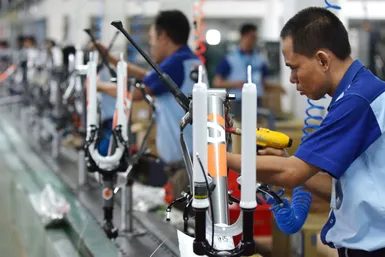
Workers in these environments do not build an entire car. They don’t assemble a television from scratch. You work with small parts. Repetitive tasks. Mastered quickly. Efficiently performed. It’s a division of labor taken to its logical extreme. You become a node in the network. A pair of hands performing a certain movement.
Examples can be found everywhere in your life:
* Car engines
* Finished cars
* Televisions
*Washing machines
* Personal computers
These aren’t just products. They are the results of a continuous production system.
You may also hear them called assembly systems or assembly line systems. They are the backbone of mass production. And they’re not going anywhere.
Efficiency is not nice to have. This is the only reason the model works.
But there is a trade-off. You gain speed and scale. You lose flexibility. The system is built for one thing. Do it well. Do it repeatedly. Don’t try to change it halfway through the line. The machine doesn’t care. The process doesn’t care. It just moves.
And you? You hold on to it.
When systems collide
Production methods are rarely found separately. They bleed into each other. See Integrated Circuit Manufacturing. It is a hybrid animal.
First, you have batch processing. Thousands of microcircuits have been etched onto large silicon wafers. This happens in stages. Dozens. Sometimes hundreds. The wafers move through the gauntlet as a group.
Then the shift happens. The circuits are diced. Separated. Each tiny chip – only a few millimeters wide – has been torn from its neighbors. Now it comes to a continuous flow line. Here, the individual components are soldered, tested and assembled into a finished electronic device. Batch meets continuous. Chaos meets order.
The One Shot Paradox
There is a third way. Project system. Also called “one-shot” production.
This isn’t about volume. It’s about singularity. You are building a ship. Skyscraper. Airplane prototype. A giant supercomputer. These things don’t repeat themselves. They exist once.
Resources are pulled from everywhere. Engineers, steel, concrete, code. They converge on a single site for one purpose. Then they dissolve.
This leads to a management nightmare. You can’t rely on the efficiencies of repetition. There is no learning curve to smooth out the errors. There is no second batch to fix the first.
So how do you keep costs from skyrocketing into the stratosphere? Specialized methods emerged. Not from the factory floor, but from project management theory. Critical path analysis. Risk buffering. Just-in-time logistics, tailored for unique constraints.
The goal is containment. Keeping the singular, unrepeatable event within reasonable financial limits. It’s a balancing act. One wrong step and the budget dissolves.
Inside the last stop of the space shuttle
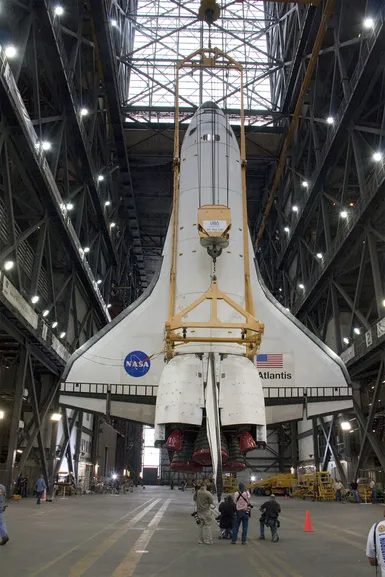
The atmosphere inside the Vehicle Assembly Building (VAB) at Kennedy Space Center in Florida is full of possibilities. The space shuttle Atlantis hovers in the echoing great darkness. There it hung, alone and vulnerable, waiting for its last mate. External tank. Solid fuel rocket booster. These components will soon lock into place, turning the bundle of metal and fuel into a machine designed to punch through the atmosphere.
This is more than just a hangar. It is one of the largest buildings on earth. It’s hard to understand the scale of the situation unless you look at the numbers. The structure can hold approximately 3.7 million cubic meters of air. This equates to approximately 130 million cubic feet of free space. For context, that amount would have swallowed most of downtown Manhattan.
Why build something so big for a space shuttle? The VAB was originally built to assemble the Apollo-Saturn V rockets. These are different beasts, longer, heavier and built for a different and more ambitious era. The interior of the building must be wide enough to accommodate the five F-1 engines on the bottom of the Saturn V. It also had to be high enough for the third stage of the S-IVB. When the space shuttle program began, engineers realized they could still use the same infrastructure. The door is also large enough. The crane is strong enough. The floor can withstand weight.
But assembling the shuttle from buildings built for Apollo required adaptations. Atlantis was not on a mobile launch pad like the Saturn V. It would be lifted vertically, attached horizontally to an external tank, and rolled out to the pad. This process is slow. Deliberate. All bolts are tightened according to the instructions. All seals have been tested.
The size of VAB is not just a matter of ego. It’s about tolerance. In smaller spaces, temperature fluctuations and wind can affect the alignment of sensitive components. The air is still here. The environment is under control. You can work on the orbiter for weeks without the building itself moving under your feet.
Ken Thornsley/NASA captured this moment before final assembly. The shuttle waited alone in the dark. Outside, the Florida humidity presses against the steel walls. The air inside was dry and cold. “Atlantis” hangs there, promising movement in a space designed for tranquility.
Even the world’s largest structures don’t seem so big when you’re standing on the orbiter’s wing. You’re looking down at people who look like ants. You’re looking up at a ceiling, it disappeared into the shadows. The scale is confusing. A reminder that spaceflight is more than technology. This is where technology was born.
VAB has observed dozens of space shuttles. It has seen failures and triumphs. It marked the end of an era. But now “Atlantis” suspended in its belly and has fulfilled its original purpose. Holds weight. It keeps the weather out. It provides the quiet you need before the noise starts.
“One of the largest buildings in the world, about 3.7 million cubic meters in size.”
There’s no need to rush here. The Rockets can wait. The stars are waiting. The building is strong enough