
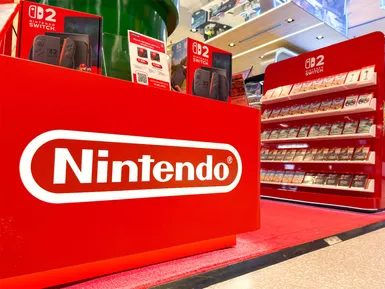
The Nintendo Switch 2 arrived in 2025. It represents the current generation of portable hybrid gaming. But the company behind it has a much older story. That story starts with paper and ink.
Nintendo is now a global giant. It owns some of the most recognizable characters in entertainment history. Yet it began as a small workshop in Kyoto. The focus was simple. Make cards.
Hanafuda and the Early Days
Yamauchi Fusajiro founded the company in 1889. The original name was Nintendo Koppai. They produced handmade playing cards. These were for hanafuda. The game was popular in Japan at the time.
Japan uses family names before given names. So Yamauchi Fusajiro is Fusajiro Yamauchi. He built a business that would outlast him by decades.
By the early 1900s, the product line changed. The company moved from mulberry bark cards to Western-style decks. This was a first for Japanese manufacturers. The strategy was bold. Sell through existing networks.
A deal with the Japan Tobacco and Salt Public Corporation made this possible. Cigarette shops became the retail front. The cards traveled nationwide.
The gamble paid off. By 1929, Nintendo was the largest playing-card manufacturer in Japan. Yamauchi retired that year. He passed control to his son-in-law. The son-in-law took the family name upon marriage.
He became Yamauchi Sekiryo.
The company had survived its founder. It had mastered distribution. It was ready for the next phase. That phase would eventually lead to arcade cabinets. Then home consoles. Then the hybrid model that defines today.
But the foundation was paper. The distribution was tobacco shops. The name was a family title.
How did a card maker become a tech leader? The answer lies in adaptability. They didn’t stick to one medium. They followed the market.
The Switch 2 is just the latest iteration. The core idea remains. Play anywhere. Keep it simple.
From Flower Cards to Corporate Power Plays
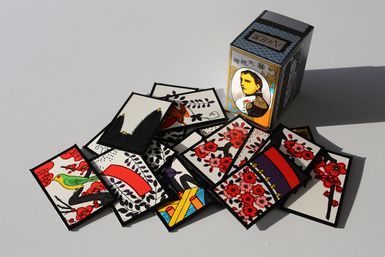
Nintendo didn’t begin with pixels or plush toys. It started with paper. Specifically, hanafuda. These Japanese flower cards were the lifeblood of the company before the gaming empire we know today ever existed.
In 1933, a younger Yamauchi took the reins, forming an unlimited partnership called Yamauchi Nintendo and Co. They moved out of the original storefront, scaling up operations significantly. The output of playing cards grew under his direction. He introduced Western-style decks, manufactured on an assembly line and pushed nationwide by a dedicated sales force. By 1947, just two years before his death, he split the logistics off. Marufuku Co., Ltd. was born to handle the distribution and marketing side of things, leaving production to its own devices.
Hiroshi Takes the Wheel
The transition of power in 1949 was anything but smooth. Fusajiro’s great-grandson, Hiroshi Yamauchi, was only 22 when he became president. The veteran employees were nervous. A kid running the show? They doubted his ability to manage. Rumors of sweeping staff changes only heightened the anxiety.
Those concerns were well-founded. Hiroshi didn’t just tweak the org chart; he tore it down. He dismissed every senior manager who had worked for his grandfather. The goal was clear: consolidate authority and modernize the business model.
The move paid off in terms of control. In 1951, he renamed the entity Nintendo Karuta to clarify the brand’s core identity. He established a new headquarters in Kyoto, centralizing production and updating the manufacturing process. It was a clean break from the past, driven by a young leader willing to burn bridges to build something stronger.
The playing card business was still the foundation, but the structure beneath it was changing. How long before they looked for a new product to replace the paper? The answer wasn’t in the deck, but in the machinery they were building.
The Disney Deal and a Dangerous Pivot
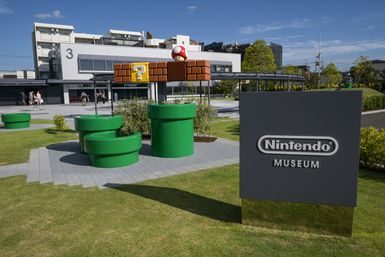
The courtyard of the Nintendo Museum sits inside a renovated factory near Kyoto. It’s a quiet spot, but the history here is loud. In the late 1950s, Hiroshi Yamauchi saw a threat. Western playing cards were eating into the market. He needed an edge. So, Nintendo became the first Japanese maker of plastic-coated cards. It was a small tweak, but it mattered.
Then came the big move. In 1959, they signed a licensing deal with Walt Disney.
This wasn’t just a partnership. It was a lifeline. The decks featured Mickey Mouse and the gang. Nintendo marketed them heavily on TV, targeting families. It worked. Sales hit a record 600,000 decks that year. The cash flowed in.
But money changes people, or at least it changes their priorities. By the early 1960s, Yamauchi was restless. He didn’t like the ceiling on card sales. So, he dropped “Karuta” from the name. Nintendo Co., Ltd. was born. He took the company public on the Osaka and Kyoto stock exchanges. It was a second-tier listing. Small stocks. Risky territory.
The IPO raised capital. Yamauchi spent it wildly. He didn’t stick to cards. He launched a line of individually packaged instant rice. It failed. Miserably.
Next, he opened a “love hotel.” Hourly rentals. It was a bizarre pivot for a game company. He also started a taxi service called Daiya. That one actually made money for a bit. But Yamauchi is pragmatic. He shut them both down.
He realized something important. Nintendo’s real asset wasn’t manufacturing. It was distribution. They had a nationwide network. They had a brand tied to leisure. That was the strength. So, he steered back toward games. In 1969, he set up a small games department in a suburban Kyoto warehouse. It was their first real step into interactive entertainment.
Gunpei Yokoi’s Creative Chaos
The breakthrough came from an unlikely source. Gunpei Yokoi was a maintenance engineer. He knew electronics. He didn’t know how to make toys, but he knew how to make things work. He invented an extendable arm. Nintendo turned it into a toy called the Ultra Hand.
The price? About ¥800. Roughly $6 in 1970 dollars.
It sold over a million units. That number gave Nintendo a foothold in the toy industry. It proved they could move product outside of cards.
Yokoi didn’t stop there. He churned out novelty items. There was the Love Tester. It claimed to measure romantic compatibility via a mild electrical charge. You held the probes. Your heart rate spiked. It was silly. It was genius.
He also built light-based shooting games. These used solar cells from Sharp Corporation, the electronics giant. Nintendo capitalized on a specific cultural trend. The bowling craze of the 1960s had died down. Thousands of alleys sat empty. Nintendo converted them into laser gun shooting ranges.
The first one opened in Kyoto in early 1973.
It was a hit. Crowds flocked to them across Japan. Overseas buyers took notice. Nintendo expanded fast. They built new facilities. They developed Wild Gunman, a light-projection game that simulated a Western shootout. It was immersive. It was dangerous. It was popular.
Hitting the Wall and Finding Consoles
Success has a short shelf life.
Just months after the ranges took off, the Arab oil embargo hit. Japan’s economy crashed into recession. Orders dried up. Overnight.
Nintendo had bet big on the shooting ranges. They were left with debt. They were teetering on bankruptcy.
Yamauchi refused to fold. He looked at emerging tech. In 1974, they secured Japanese distribution rights to the Magnavox Odyssey. It played Pong. It was the first home video game console. To build the microprocessor circuit boards, Nintendo partnered with Mitsubishi Electric Corporation.
By 1977, they released their own console. The Color TV-Game series. It was basic. But it sold. Together, the series moved about 2.5 million units.
A year later, they released a computerized Othello. It was one of their first standalone electronic games. No TV required for the base unit. It was a step toward independence.
By the late 1970s, Nintendo had stabilized. But they needed more than Japan. They needed the world. In 1979, Minoru Arakawa, Yamauchi’s son-in-law, opened Nintendo of America in New York City.
Its job was simple. Manage the growing arcade operations.
In 1980, it was formally incorporated. A wholly owned subsidiary. It was a distribution hub. It laid the groundwork for the U.S. market. But the arcade scene was volatile. They needed a hit that could travel.
The Game & Watch Revolution
The answer arrived in 1980.
Gunpei Yokoi returned. He created the Game & Watch. It was a handheld electronic game. Small. Monochrome LCD screen. Single game per unit. It also doubled as an alarm clock.
It was affordable. It was compact. It was portable in a way nothing else was.
The response was immediate. It was a runaway success. For the first time, Nintendo had a global consumer electronics hit. It wasn’t just a toy. It was a lifestyle accessory.
“Compact and affordable, it was a runaway success and gave Nintendo its first global hit in consumer electronics.”
The Game & Watch changed the math. It proved Nintendo could export design, not just product. It set the stage for the next leap. The handheld market was theirs. The rest was just catching up.
But the competition was waking up. Atari was stirring. Sega was planning. Nintendo had the momentum, but momentum isn’t a moat.
The foundation was set. The bricks were laid. What would they build next?
How Donkey Kong Built the NES Foundation
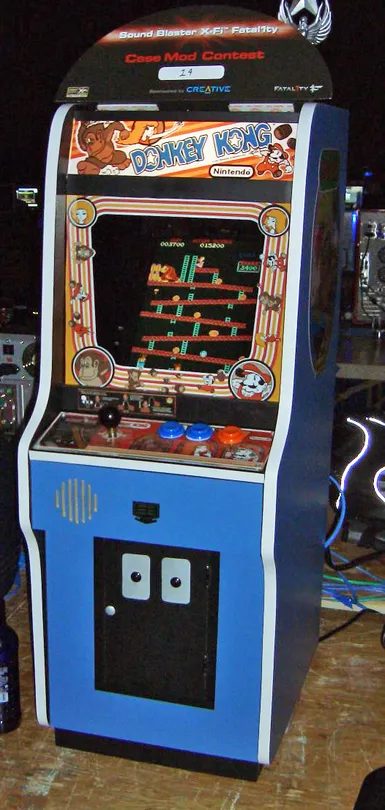
The arcade success of Donkey Kong didn’t just make Nintendo rich; it gave them the capital and confidence to build their own hardware. Before that, they were just a licensing machine. They handed the rights to Coleco for home consoles and Atari for computers. The game appeared on ColecoVision, Atari 2600, Intellivision, and 8-bit computers. It was everywhere. But the real win wasn’t the royalties. It was the proof of concept.
Nintendo saw a market that needed control. They stopped being a guest in other people’s living rooms and decided to build the house. The result was the Famicom.
The Famicom Launch and Early Hurdles
Released in 1983, the Family Computer hit Japan with a bang. The name itself—Famicom—was a blend of family and computer. It used cartridges, which meant one machine could run many games. That was the dream. The reality was a bit messier.
Sales exploded. Over 500,000 units moved in the first two months. People wanted it. But the hardware wasn’t ready. Early units suffered from critical defects. Nintendo had to recall them. It’s a rare moment of humility in gaming history. They fixed the flaws. Then they sold more. The Famicom didn’t just participate in the Japanese home market; it owned it.
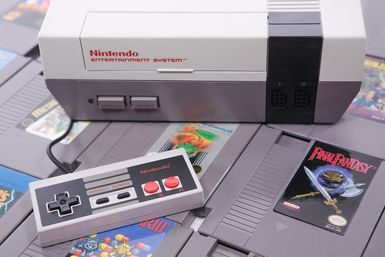
Handheld dominance and the rise of competition
Nintendo didn’t just sit still with its home console success. In 1989, they dropped the Game Boy. It was a monochrome screen with a lithium battery that promised 30 hours of play. Cheap. Portable. And critically, it came with Tetris. That bundle was a masterstroke. The handheld flew off shelves. For years, it was the only real option for on-the-go gaming, leaving competitors scrambling to catch up.
But the home console space was getting crowded. Sony entered the ring in 1994 with the PlayStation. It was a bold move. Sony wasn’t a game developer; they were a hardware and media giant. They offered CD-based games, which meant more storage, better sound, and 3D graphics that Nintendo’s cartridges struggled to match. The technology gap was real.
Nintendo pushed back with the Nintendo 64 in 1996. It kept the cartridge format. The graphics were sharp for the time, and Super Mario 64 defined 3D platforming. But the lack of CDs hurt third-party developers. Many studios, eager for the extra storage space and lower production costs of optical media, moved to the PlayStation. The market share split. Sony took the high ground in raw numbers. Nintendo held the loyalty of its core fanbase, but the “console war” had shifted from a monopoly to a fierce, expensive battle for relevance.
Shifting paradigms
The late 90s and early 2000s were a transition period. The Dreamcast tried to fight but failed. Xbox arrived in 2001, bringing Microsoft into the fray with a focus on online gaming via Xbox Live. Nintendo’s GameCube, launched that same year, was technically competent but compact and lacked the backward compatibility consumers wanted. It lost out to the beefier, DVD-playing PlayStation 2. The PS2 became a cultural juggernaut, selling over 155 million units. Nintendo was playing catch-up, not just in hardware specs, but in understanding what the next generation of gamers actually wanted.
The company’s response to this pressure came in the form of risk. Instead of chasing high-definition graphics, they focused on motion controls. This would lead to the Wii. But before that, there was the Game Boy Advance. It dominated the handheld space for a decade. It proved that Nintendo could innovate even when the home console wars were getting bloody. They weren’t just making games; they were defining categories.
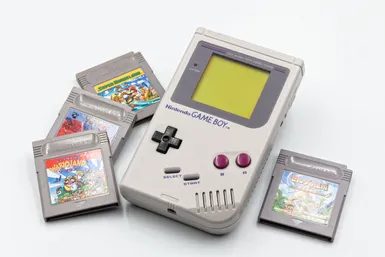
The Game Boy didn’t just survive; it dominated. Launched in 1989, Nintendo’s handheld console leveraged interchangeable cartridges to let players swap titles instantly. The hardware was simple. It was durable. It was cheap to produce. Tetris was bundled with the launch, turning a plastic brick into a global cultural touchstone.
By the early 1990s, Nintendo held roughly 80% of the global video game market. But the ceiling was cracking. Sega was pushing hard. The Genesis, known as the Mega Drive elsewhere, offered 16-bit graphics that felt faster and sharper. Sega’s marketing didn’t aim at kids; it targeted teenagers and young adults with an edgy, “cool” campaign. Sega Corporation (SGAMY) also invested in American development talent, giving the platform a distinct cultural edge in the U.S. market.
This wasn’t just a product launch. It was the start of the console wars.
Nintendo responded with the Super Nintendo Entertainment System (SNES). The SNES brought more technical power to the table. First-party titles like Super Mario World and The Legend of Zelda: A Link to the Past solidified Nintendo’s dominance. Sega had strong sales, but Nintendo had the crown.
Shifting Strategies in the New Millennium
The 21st century arrived with new threats. Sony (SNY) and Microsoft (MSFT) entered the arena with consoles built for raw performance. These machines appealed to older gamers and tech enthusiasts who craved realism and graphical fidelity.
Nintendo faced a choice. Match the specs? Chase the megahertz?
Instead, the company doubled down on something else. While competitors focused on photorealism, Nintendo emphasized originality and pure playability. They didn’t try to be the most powerful box on the shelf. They tried to be the most fun.
This divergence in philosophy set the stage for a decade of distinct market segments. Sony and Microsoft fought over processing power and graphics cards. Nintendo fought over mechanics and novelty.
Why does this matter for investors or industry watchers? Because strategy defines margin. Competing on hardware specs is a race to the bottom in terms of R&D costs. Competing on IP and gameplay is a race to the top in terms of brand loyalty. Nintendo understood that people don’t just buy consoles. They buy experiences.
The rivalry didn’t end. It evolved. And the companies that survived weren’t necessarily the ones with the best chips. They were the ones with the best ideas.
The Hardware Shift: GameCube to DS
The GameCube arrived in 2001. It was not the most powerful box on the shelf. Sony’s PlayStation 2 had already carved out a massive lead, and Nintendo’s console lagged behind in raw processing power. But size mattered. The GameCube was compact. It was distinct.
Nintendo prioritized character-driven storytelling over brute force. The result was a library of titles that still hold up today. Super Smash Bros. Melee defined competitive party gaming. Metroid Prime brought first-person exploration to a 2D franchise. The Legend of Zelda: The Wind Waker proved that cel-shaded graphics could carry deep, atmospheric narratives. These weren’t just games; they were anchors for a loyal community.
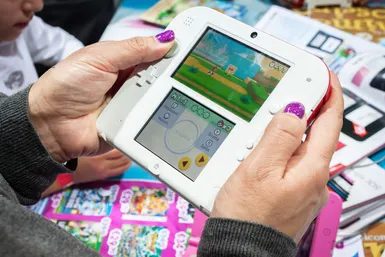
Then came 2004. The Nintendo DS changed the handheld landscape. Dual screens were the headline feature. The stylus allowed for precise input where buttons could not. Wireless connectivity let players compete locally without cables. This wasn’t just a gadget for hardcore gamers. It appealed to commuters, students, and casual players alike. The DS became one of the best-selling consoles in history. It proved that accessibility could drive volume.
The momentum carried into the next generation. The Wii launched with motion-sensitive controls. Gaming became physical. You didn’t just press A to jump; you swung the controller to hit the ball. This approachability pulled in non-gamers. Families played together. The Wii sold more than 100 million units worldwide.
Nintendo had expanded its reach. It wasn’t just about dedicated fans anymore. It was about living rooms. It was about motion. The company had found a new audience by making gaming less about specs and more about experience.
“The Wii brought motion-sensitive controls into the mainstream, making gaming more physical and approachable.”
This strategy worked. But relying on gimmicks has a shelf life. The next challenge was maintaining that momentum when the novelty of waving a controller faded. How do you keep people engaged when the “wow” factor disappears? Nintendo had to decide if it could build a lasting ecosystem on casual appeal alone. The hardware was ready. The audience was there. The question was what came next.
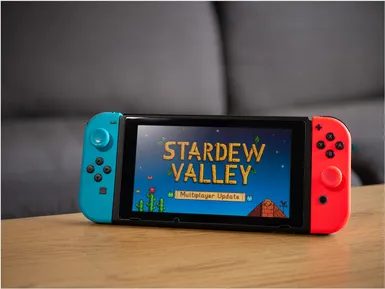
The Wii U didn’t just fail. It stumbled. Released in 2012, that console tried to reinvent the controller with a touchscreen tablet that doubled as a gamepad. It was a brave, expensive idea that barely moved the needle. But it planted the seed. Nintendo took those rough concepts, refined them, and eventually dropped the Switch in 2017.
That original Switch was a pivot point. It let you play on the go or dock it to a TV. It saved the company. After years of stagnant sales and missed hardware trends, Nintendo found its footing again. The hybrid model worked. People bought it.
How the Switch 2 Changes the Game
Fast forward to 2025. Nintendo drops the Switch 2.
On the surface, it looks familiar. You’d recognize it in a lineup of other controllers. It’s not a radical departure. It’s an evolutionary upgrade. But look closer. The hardware is heavier. The screens are sharper.
The big headline? 4K support.
Previous models were locked to lower resolutions when docked. The Switch 2 pushes that boundary. It supports high-fidelity graphics that were impossible on the original hardware. The controls have been tweaked, too. Better triggers. More responsive buttons. And finally, integrated social features. You can video chat directly through the system without needing a separate device or complex workarounds.
Critics called it an incremental step. Maybe. But “incremental” is generous for hardware that actually delivers the performance gamers complained about for years. It feels like the original Switch, only faster. Smoother. More capable.
Launch Titles That Matter
Software drives hardware sales. Period. Nintendo knew this. So they didn’t launch with a library of ports. They launched with exclusives that showcase the new power.
Mario Kart World is the lead dog. It’s not just a reskin. The tracks load faster. The effects are denser. The 4K output makes the vibrant colors pop in a way the original Switch couldn’t handle. It’s the same game, but the improved graphics and performance make it feel like a new experience.
Donkey Kong Bananza is the other anchor title. Again, it benefits from the hardware jump. The textures are clearer. The frame rates are more stable. These aren’t minor tweaks. They’re foundational improvements that justify the upgrade for anyone who owns the first generation.
Why This Still Works
Nintendo has always played a different game than Sony or Microsoft. They don’t chase raw specs. They chase accessibility. They chase familiarity.
The Switch 2 continues this strategy. It uses known characters. It uses familiar mechanics. It pairs technical innovation with design continuity. You know how to play it. You know what to expect. But it works better.
This approach ties back to Nintendo’s roots. They started as a playing card company. They understood fun before they understood silicon. Gaming, for Nintendo, has always been a shared activity. A family affair. Something you do together in the living room or on the couch.
The Switch 2 doesn’t break that link. It strengthens it.
The console is an evolutionary upgrade rather than a dramatic redesign, noting improved performance and visuals while keeping the feel of the original.