
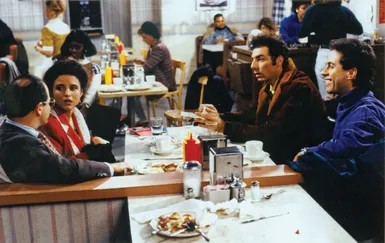
The cast of Seinfeld stands as just one link in a massive chain that defines American broadcasting. National Broadcasting Co., Inc. isn’t just a logo. It is the television component of NBCUniversal. Comcast Corporation owns NBCUniversal. But to understand where the money flows and why the brand holds value, you have to look back further. Much further.
The oldest broadcasting network in the United States started as a radio experiment. It launched on November 15, 1926. The event was a four-hour gala. It originated from the ballroom of the Waldorf-Astoria Hotel in New York City. This wasn’t a solo venture. It was a joint effort by three giants in mass communications.
- Radio Corporation of America (RCA)
- American Telephone and Telegraph (AT&T)
- Westinghouse Electric Corporation
RCA acquired two early stations. WJZ in Newark, NJ, founded by Westinghouse in 1921. WEAF in New York City, founded by AT&T in 1923. After the network was created, these stations became the hubs. WJZ centered the Blue Network. WEAF centered the Red Network. They operated as semi-independent entities with links to other cities.
David Sarnoff orchestrated the formation. He was the general manager of RCA. By 1930, RCA became the sole owner of the National Broadcasting Company. Sarnoff initially wanted an informational service. The market had other ideas. Pure entertainment became the stronghold. Amos ’n’ Andy and The Jack Benny Program drove listenership.
Regulatory pressure changed the landscape. The Federal Communications Commission (FCC) forced a split in 1943. NBC sold the less-lucrative Blue Network. Edward J. Noble bought it. He eventually renamed it the American Broadcasting Company, Inc. (ABC). The Red Network remained the money maker. By 1938, it carried 75 percent of NBC’s commercial programs.
The stakes rose sharply in 1948. NBC suffered a severe blow. A talent raid by the Columbia Broadcasting System (CBS) stripped NBC of its leading performers. Jack Benny left. George Burns and Gracie Allen left. Freeman Gosden and Charles Correll left. Edgar Bergen left. Red Skelton left.
This loss hurt. It weakened NBC’s edge in the upcoming television age. CBS had the talent. NBC had to catch up.
The Television Transition and Tech Dominance
The shift to television began on April 30, 1939. NBC broadcast the opening ceremonies of the New York World’s Fair. This marked the start of a regular television service. By 1951, NBC had established a coast-to-coast network.
Success didn’t come easily. The Howdy Doody Show ran from 1947 to 1960. Kraft Television Theatre ran from 1947 to 1958. Milton Berle and Sid Caesar were major stars. Yet NBC perennially ran second in the ratings to CBS.
So how did NBC maintain its industry position? Through technology.
RCA developed a colour television system. The FCC accepted it as the industry standard in 1953. That same year, NBC pioneered the first coast-to-coast transmission of a colour television broadcast. In 1956, it made the first television broadcast recorded on videotape. This moved production away from live performances.
“NBC remained a leader in the field of technological advancements.”
Sylvester L. (“Pat”) Weaver changed the programming landscape. He served as chief programmer and network president from 1949 to 1955. His innovations are still embedded in how we consume media.
He launched Today in 1952. An early-morning news and entertainment series. He launched The Tonight Show in 1954. A late-night talk show format that defines the genre today.
Other concepts followed:
- Wisdom (1957–65): Interviews with distinguished guests in arts, sciences, and politics.
- Network “spectaculars”: Irregularly scheduled events. The 1955 musical Peter Pan was a prime example.
- The Huntley-Brinkley Report (1956–71): A half-hour newscast anchored by Chet Huntley and David Brinkley.
- Made-for-TV feature films.
- The miniseries format.
- Tomorrow (1973–82): A nightly “after hours” talk show.
Creative ground was broken in comedy and variety. Rowan and Martin’s Laugh-In ran from 1968 to 1973. Then came Saturday Night Live in 1975. These shows didn’t just entertain. They created cultural touchstones that advertisers still chase.
The network evolved. The ratings fluctuated. But the infrastructure—the tech, the format, the talent pipeline—remained robust. This is the foundation of a media empire. The rest is just programming. Or is it?
How NBC Climbed from Ratings Rock Bottom to Cable Dominance
The radio side of the house was already dying. NBC’s radio business sagged through the late 1980s. Westwood One bought the network in 1987. The signal went silent in 1999. But on the small screen, the network was in freefall.
It entered the 1980s as television’s lowest-rated network. A distant third. ABC and CBS were far ahead. The situation improved dramatically when Grant Tinker and Brandon Tartikoff took the helm. Tinker became network chairman. Tartikoff became chief programmer. The beginning of the decade changed everything.
Even with budget cuts following the 1985 GE purchase of NBC, the strategy held. They built a steady diet of popular situation comedies. Cheers ran from 1982 to 1993. The Cosby Show dominated from 1984 to 1992. Seinfeld arrived in 1989 and stayed until 1998. Friends closed out the 20th century from 1994 to 2004.
The drama side was just as powerful. Law & Order aired from 1990 to 2010. ER ran from 1994 to 2009. The West Wing completed the trio from 1999 to 2006. NBC climbed to the top of the ratings.
Expanding into Cable and Corporate Mergers
By the 1990s, NBC was no longer just a broadcast tower. It established a significant presence on cable television. CNBC launched as the Consumer News and Business Channel. MSNBC appeared as a joint venture with Microsoft Corporation. It specialized in news and political views. The network diversified.
Ownership got complicated. RCA was purchased by GE in 1985. That deal set the stage for the next move. In 2004, NBC merged with Vivendi Universal Entertainment. The result was NBCUniversal. GE remained the majority owner.
Then came Comcast. In 2009, the cable giant agreed to acquire 51 percent of NBCUniversal from GE. The deal completed in January 2011. Two years later, Comcast bought GE’s remaining shares. The landscape shifted again.
“The network climbed to the top of the ratings with a steady diet of popular situation comedies… and powerful dramatic series.”
It wasn’t just about one show. It was about filling the prime-time slots reliably. Viewers tuned in. Advertisers followed. The ratings climbed. The radio business remained a ghost town, but the TV empire grew.
Who owns it now? Comcast holds all the cards. The evolution from a struggling radio broadcaster to a cable and streaming powerhouse is complete. The numbers back it up. The strategy worked.