
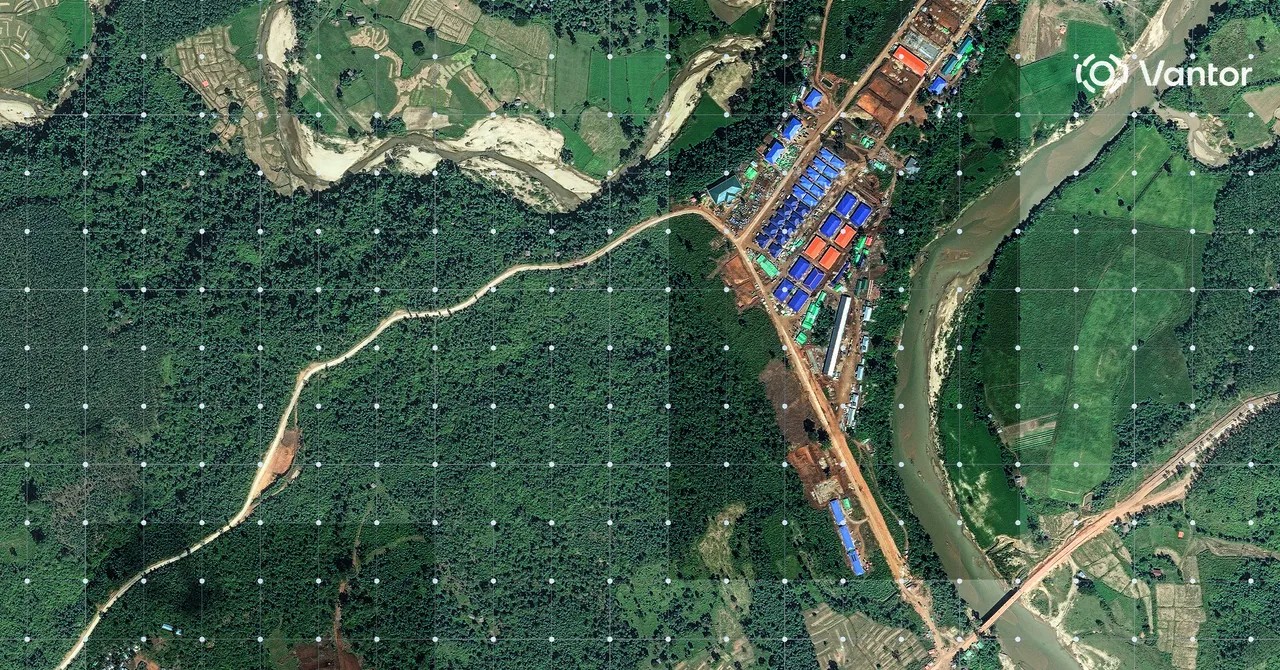
Satellite images tell a grim story.
They show forests flattened. Land cleared. Dozens of new buildings rising from empty fields.
In just six months, more than two dozen suspected scam compounds have sprouted in war-torn Myanmar. This isn’t a slowdown. It’s an expansion. The so-called crackdown on these criminal hubs last year didn’t stop them. It barely paused them.
The Myth of the Crackdown
Eric Heintz, a global analyst with the International Justice Mission (IJM), looked at the data. He saw what many suspected was true.
The government raids were theater.
“Some were skeptical that the crackdowns lastyear were genuine, and this imagery shows that was right,” Heintz says. “The scale of these new developments is enough to absorb everything destroyed last year.”
Myawaddy region. Near the Thai border. Since the start of the year, at least 25 alleged sites have popped up. Trees are gone. Concrete remains.
Why do these operations grow faster than they can be destroyed?
Speed.
Heintz notes that some sites went from empty dirt to operational complexes in just a couple of months. Some construction started back in January, hidden in plain sight while politicians prepared for elections. Others began earlier. The pace is aggressive.
How the Scam Industry Actually Works
These aren’t just office parks. They are prisons.
Operated largely by Chinese organized crime, these compounds fuel a global theft ring. We are talking about billions of dollars stolen via romance scams and cryptocurrency fraud. Victims in the US and elsewhere don’t stand a chance against the scale of it.
But who does the work?
Not willing employees. Trafficking victims.
People from over 60 countries are lured with fake job offers. They arrive. They get their passports. They get beaten if they refuse. They work 24/7. Cold calling. Building trust. Cashing out stolen funds.
It’s industrial scale slavery.
Which Tech Enables This Operation?
You’d think cutting off the internet would help. It hasn’t.
A WIRED investigation last year found Starlink antennas on the rooftops of at least eight compounds. Starlink, Elon Musk’s satellite internet service, was present. US law enforcement seized some terminals.
But the signal persists.
Heintz found that at least half of these new locations are using Starlink. The IJM knows the locations. They know the IPs.
So why isn’t it shut down?
“It remains unclear why the company can’t shut these off,” Heintz notes.
Starlink claims to have cut 2,500 device connections previously. They did not immediately comment to WIired on the new findings.
The layout of the compounds matches known sites. Large buildings for housing victims. Infrastructure for power and data. Foreign internet service providers detected via tech data. It’s a repeat pattern.
Who Is Really Behind It?
Mechelle B. Moore runs Global Alms Incorporated, an anti-trafficking nonprofit based near the border. She sees the aftermath of the raids.
When a compound is raided? The bosses move the workers.
Moore’s group used drones to check nine sites that were supposedly emptied.
They were populated. New victims were inside.
“Nothing has changed, unfortunately. It’s just growing,” Moore says.
The military junta raided sites in October. They exploded buildings. They steamrolled phones. It made for good video. It did not make for justice.
The criminal entities remain untouched. They relocate. They rebuild.
The Myawaddy region is remote. There is little other economic use for these cleared lots except for illegal operations. That isolation protects them.
What Happens Next?
The search intent is clear: people want to know if this is getting better.
It isn’t.
The compounds are growing. The tech is adapting. The victims are being moved.
Satellite images show the truth that press releases hide. The forest is gone. The buildings remain.
And somewhere in those structures, thousands of people are waiting for an escape that doesn’t come.