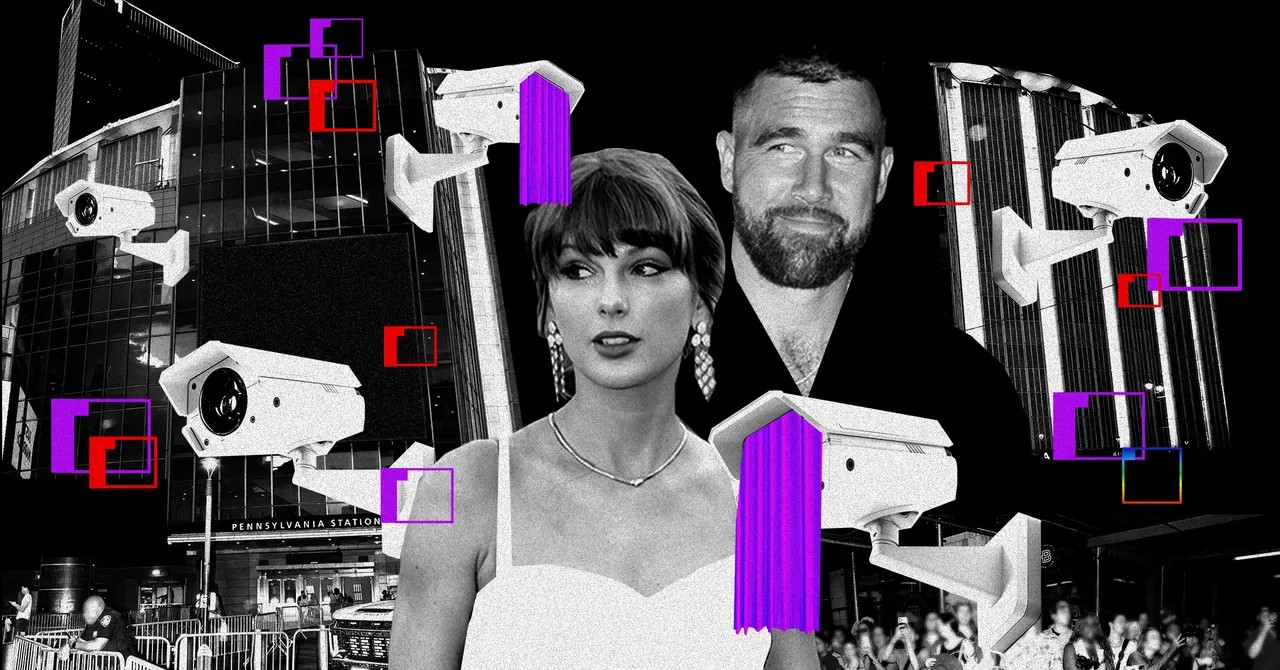
The cameras went black. On July 2, 2025, inside Madison Square Garden—the most secure venue in the US, or so its owner claims—Taylor Swift’s pre-wedding rehearsal dinner took place behind a digital veil.
James Dolan’s company swears its biometric surveillance is vital for safety. It isn’t just talk. Roughly 130 officers flooded the area. Officials prepped to block surrounding blocks for the following day’s massive event. Yet, for Swift and Travis Kelce, security looked different.
MSG locked nearly its entire security team out of the surveillance network that night. An internal document obtained by WIRED confirms this. The move disabled the controversial face-recognition program. Security staff couldn’t operate it. Sources say the lockout held for seven hours. It started with an executive order.
“If you somehow still have access to cameras after3PM, you will be forcibly loggedoff,” the memo warned.
This wasn’t a glitch. It was a choice. And it reveals something uncomfortable about privacy in America.
A Privacy Blackout for the Elite
The shutdown order applied specifically to July 2. But sources tell WIRED it repeated on July 3. That was the wedding night. Roughly 1,000 high-profile guests attended. Names from music, business, sports, and media filled the Infosys Theater.
Swift’s and Kelce’s teams planned with extreme caution. Guests signed nondisclosure agreements before getting digital invitations. Tents covered parking areas for discreet arrival. Attendees were told to keep phones off. One guest’s detailed post was quickly deleted from social media.
“This makes it much easier to tracka person, because we canjumpfromcameratocamerareal time.”
That quote comes from a person familiar with the Genetec setup. Genetec is the backbone of MSG’s video security. It manages feeds from various cameras. It feeds data to eConnect, the face-recognition tool at guest entrances. If a face triggers an alert, the system tracks that person across the building in real time.
During Swift’s event, that tracking stopped. Attendees avoided the prying eyes of Dolan’s biometric gaze.
Retribution or Protection?
MSG has tested biometric surveillance at its venues since 2018. Locations include Radio City Music Hall, the Beacon Theater, and the Sphere in Las Vegas. Dolan argues it keeps dangerous people out. He once told a news anchor, “If you’re a terrorist it’ll say,’That’s a terrorist.'”
But the public record tells a different story.
Fans critical of Dolan have found their faces on watch lists. A lawyer for a suing police officer was banned in April. A mother trying to enter Radio City with her Girl Scout daughter was blocked. Her firm was in a dispute with a Dolan entity.
“Civil libertarians say they understand whythe couplemightnotwantDolan’s surveillancesystemdeployedin full. But thoseactivistsseethe accommodation asmorethan a one-off.”
Evan Greer, director of Fight for the Future, calls this a preview of a dark future. “A future where privacy is a luxuryfor the elite few, andthe restofus are subjected topervasivesurveillanceeverywhere wego,” she said.
An Outlier in a High-Tech Arena
MSG hosts private events often. NBCUniversal takes over Radio City yearly. Warner Bros. Discovery books other Dolan properties. None of them asked to disable security systems. Sources say it has “never been done.”
Even the NYPD doesn’t get this treatment. When the Police Academy holds its graduation in the Garden, the cameras stay on. WIRED previously found a photo in the system from such an event. It shows an officer in dress uniform.
This makes the Swift-Kelce celebration a stark outlier.
Why would two of the world’s most famous people pay $1.2 million to $1.6 million just to buy privacy? They could have rented an island. They could have chosen a discreet venue. The Garden offers unique advantages: no windows, a roof, tightly controlled access. Paparazzi and drones have a harder time there.
But security pros argue people don’t choose the Garden for privacy. They choose it for status.
The Cost of Being Famous
The timing was volatile. Early July brought a “heightened threat environment” due to America 250 celebrations. Tensions with Iran loomed. A man had just been sentenced to 15 years for plotting an attack on Swift’s concert in Vienna.
In such a climate, interior cameras should help. They should catch intruders. They should identify threats.
Yet the NYPD supplies no threat data to MSG. A spokesperson previously told WIRED this. While the FBI’s most-wanted lists are uploaded, a former security staffer sued MSG. They claimed the face-recognition narrative was fabricated to hide its real purpose: targeting personal enemies.
Michelle Dahl of the Surveillance Technology Oversight Project noted the irony. “Clearly the technologyis notthat helpful if itwasn’tneededat one ofMSG’shighest-profi leevents oftheyear.”
Some cameras did roll. Notices near entrances stated guests agreed to “photography and videography” from June 29 to July3. Their images could be used in “anyand all manner, format,and media.”
The Database of Risk
The Garden’s handling of VIPs has drawn scrutiny. Last year, hacker collective ShinyHunters leaked an internal database. It contained over 39,000 names. MSG sued WIRED for defamation. In the suit, MSG confirmed the data was stolen via a social-engineering attack. An employee was fired.
The database included risk scores for celebrities. WIRED found names like Jamie Foxx, Simu Liu, and Lewis Hamilton. These scores seemed to reflect fears of negative publicity. MSG acknowledged a “Threat Management notes field” for incidents or fan behavior.
It also tracked race, gender, and sexual orientation. Elliot Page and Emira D’Spain were marked LGBTQIA. Page received a “low” risk score. So did Posen and D’Spain. Only 4 percent of tagged LGBTQIA celebrities had threat notes.
Tony Simone, a New York lawmaker, questioned Dolan’s obsession. “Why is he so obsessedwith us?” he posted. MSG denied this, claiming the data was for inclusion and outreach.
Privacy for the Rich
Attempts to regulate this technology predate recent reports. A state liquor authority inquiry ended with a mild warning. A new bill targeting biometric surveillance in public spaces is co-sponsored by NY Mayor Zohran Mamdani and State Assemblymember Tony Simone.
Illinois already bans private biometric surveillance without consent. The Chicago Theater doesn’t collect this data. MSG’s lawsuit argued that negative press would increase regulatory risks.
“Idon’t blame themfor turningit off, butlet’sbe clear,” saidDahl. “Privacy shouldn’tjust beaffordedtotherichand famous.”
Swift’s and Kelce’s reps did not comment. MSG declined to speak, citing active litigation with WIRED.
The cameras at the Garden are powerful. They track every face. They flag every risk. But on one July night, for one night, they saw nothing.
Is this protection? Or is it simply what money can buy when the walls have eyes?
The rest of us walk through the Garden, or the street outside, knowing the eyes are open. And they never blink.