



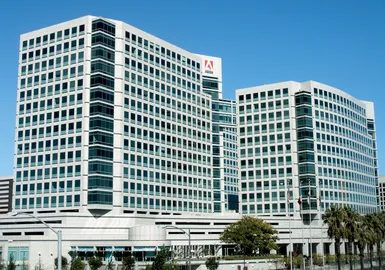
San Jose, California. That is where Adobe Systems makes its home today. The company is an American developer of printing, publishing, and graphics software. Its roots run deep. Adobe was instrumental in creating the desktop publishing industry. It did this through PostScript. This printer language changed everything.
How Adobe Started
John Warnock and Charles Geschke founded the company in 1982. They were computer scientists at Xerox Corporation. Specifically, they worked at the Palo Alto Research Center. This place is known as PARC. While there, they developed a programming language. It described the precise position, shape, and size of objects on a computer page. The language was later named PostScript. It described letters and graphics in mathematical terms. It did not reference any specific computer or printer. Any device that could interpret the language would generate a representation. It would do so at whatever resolution the device supported.
Xerox did not bring the technology to market. So Warnock and Geschke went on their own. They formed a new company. They named it after a creek near their homes.
The Desktop Publishing Shift
Apple Computer, Inc. acquired 15 percent of Adobe in 1983. Apple became the first licensee of PostScript. Three years later, in 1985, Apple introduced the LaserWriter. This was the first Macintosh-compatible PostScript printer. It used a laser-print engine from Canon Inc. The LaserWriter included PostScript renditions of classic typefaces. It also had a built-in PostScript interpreter. This computer translated commands into marks on each page.
This combination of PostScript and laser printing was a dramatic advance. It offered better typographical quality. It provided more design flexibility. PageMaker, a page-layout application by Aldus Corporation, joined the mix. Together, these technologies let any user produce professional reports. They could make flyers and newsletters. They did this without specialized lithography equipment. They needed no specialized training. This phenomenon became known as desktop publishing.
Commercial printers and publishers were scornful at first. Laser printer output fell short of professional standards. But manufacturers of imagesetters followed Apple’s example. Linotype-Hell Company led the way. They licensed PostScript. Within a few years, PostScript became common throughout the publishing industry.
The Font Wars and Stock Market Entry
Adobe went public in 1986. Revenues grew to $168.7 million by 1990. But relations with Apple deteriorated in the late 1980s. The dispute was over PostScript licensing fees. In 1989, Apple announced plans to sell its Adobe stock. It also planned to collaborate with Microsoft Corporation. They would develop an enhanced PostScript clone. Apple intended to introduce its own font-rendering technology. It was called TrueType.
For more than a year, the dispute roiled the computer and publishing worlds. This conflict is known as the font wars. Apple and Adobe eventually reached a compromise. Microsoft abandoned its PostScript clone. It adopted TrueType for its Windows operating systems.
The Shift From Fonts To Software
PostScript licensing didn’t just keep Adobe afloat in the nineties; it fueled a pivot. By late 1998, the Adobe Type Library held over 2,500 typefaces. But the real money wasn’t in the fonts anymore. It was in application software.
The company started on Macintosh. Then came UNIX and Windows. The first big hit arrived in 1987: Adobe Illustrator. It was a drawing package built on PostScript, targeting artists and technical illustrators. Photoshop followed in 1990. It retouched digitized photos. It became Adobe’s biggest seller.
Why did it win?
Photoshop was one of the first commercial apps with an open architecture. Outside developers could build plug-ins.
Scores of developers jumped in. They cemented Photoshop’s dominance by adding features the core team didn’t.
The rest of the nineties were defined by acquisitions. Adobe didn’t just build; it bought.
In 1991, Premiere launched for video editing. 1994 saw the acquisition of Aldus and its PageMaker software. The next year, Adobe bought Frame Technology Corporation. FrameMaker handled technical manuals and long documents. They also picked up Ceneca Communications’ PageMill for web pages and SiteMill for site management.
By 1996, Adobe dipped into the consumer market. PhotoDeluxe arrived as a simplified photo editor.
Document Distribution And The PDF War
The Adobe Acrobat family targeted a different problem: standardizing electronic documents.
Convert a file to PDF. Open it on any major OS. The formatting, typography, and graphics stayed nearly intact. Acrobat Reader was free. It made PDF the standard for distribution.
But the internet changed the rules. HTML offered compact file transfers. It eroded PDF’s market share. Still, PDF held ground. In 1998, it became the default image format for Macintosh.
The financial shift was stark. By 1997, 80% of Adobe’s revenue came from applications. Windows sales finally surpassed Macintosh sales for the first time.
Expanding Into Interactive Media
The 2000s brought bigger targets. Adobe acquired Macromedia in 2005. The deal brought FreeHand, a direct competitor to Illustrator. It added Dreamweaver for web authoring and Director for CD-ROMs.
Crucially, Adobe gained Shockwave and Flash. These tools produced animations and interactive media for web browsers.
Then came Adobe Media Player in 2008. It competed with iTunes, Windows Media Player, and RealPlayer. It played audio and video in various formats. Television networks adopted it to stream shows over the internet in the compact Flash format.
The strategy was clear. Control the creation tools. Own the distribution.